








| The 'tough but rewarding' job of a £79k-a-year Caledonian Sleeper driver Posted by ChrisB at 21:20, 3rd February 2026 |     |
From the Telegraph, via MSN
Jason Thomas, 47, yells out of the carriage window. Driving 80mph at 4am, he’s still three hours from home.
Caffeine and sugar aren’t enough during a 12-hour overnight stint driving the Caledonian Sleeper train. “It’s how we stay awake in those early hours – whistling and shouting.”
Thomas has driven the “Cally Sleeper” from London to Scotland for six years, topping up his hours by driving freight trains.
The service has run overnight trains between Scotland and London since 1873, with the “Lowlander” route between London and Edinburgh and the “Highlander” route to Aberdeen, Inverness and Fort William.
The sleeper operates on five routes, six nights a week. Each route, from London to a selection of locations in Scotland, takes around 11 hours. A bunk bed twin room on the luxury train can cost more than £250, but seated coaches are available for bargain hunters
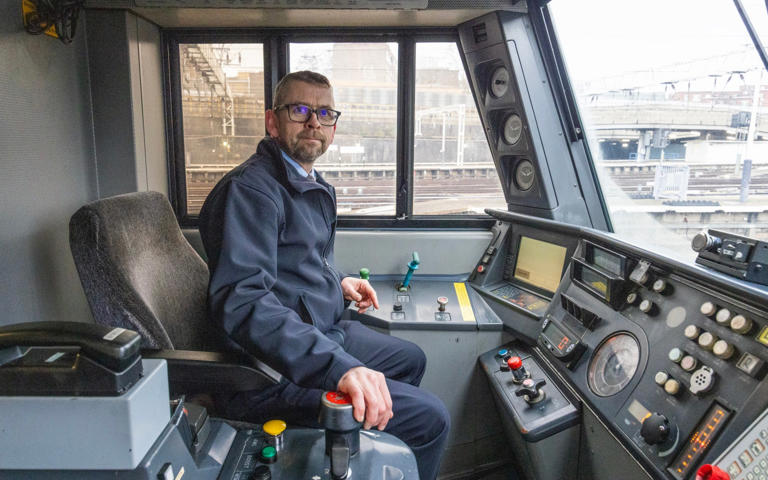
It’s a special route to drive, says Thomas. “At the end, you see these people who’ve been asleep, trusting you all night. They get off to their holidays, their families. It’s rewarding, even if you do just have to push through sometimes.”
His section of the Caledonian Sleeper “Highlander” route isn’t as scenic as the northern drives over the Cumbrian Fells, Thomas admits. He sets off from Euston at 9.15pm, but changes with another driver when he reaches Preston just after midnight. To take him home, he switches with a different southbound (“Lowlander”) driver at 3am to get him back to Euston for 7.30am.
Thomas follows the West Coast Main Line through Rugby, Stafford and Lancashire. If there’s planned maintenance, he takes the East Coast instead. Most drivers don’t get to vary their routes, he adds, so “we’re lucky that way”.
‘You can pay your mortgage’
Thomas makes £79,000 a year – just above the national £76,327 average for train drivers in Britain, according to figures from the Office for National Statistics (ONS). He feels comfortable supporting his family alongside his wife, who also works full-time, and their two sons.
“You can pay your mortgage. It’s a safe place to be, but we’re not going to retire to the Bahamas,” says Thomas, who lives in South London.
He adds: “There are guys here for 40 years who worked decades for peanuts for the promise of a decent [final salary] pension. These days, [many] new starters are on defined contribution schemes with additional voluntary contributions unless you opt out.”
Train drivers are now among the best-paid jobs in Britain, ONS figures indicate, alongside chief executives, pilots and head teachers.
Labour agreed to a 15pc pay rise for train drivers across the country in 2024 following two years of bitter union disputes and strikes. Official estimates given to Parliament suggested this would cost the taxpayer £135m. Taxpayers pay drivers’ salaries via subsidies given to train companies.
Drivers faced diminishing public support in the run-up to the agreement, YouGov polling found at the time, with 54pc of British people opposed to train driver strikes. Thomas says: “You sometimes detect people saying, ‘You’d go sick at the drop of a hat. You don’t go to work.’ Actually, we bend over backwards to keep things moving because there’s a pride in that.
“We have collective bargaining done for us by [our union] Aslef, with agreed rates of different operators. Whether the public thinks the salaries are surprisingly high or not often comes down to the understanding of the level of responsibility, training and commitment required for the role and whether it is seen as a specialist profession rather than semi-skilled manual work.”
‘Never considered a career as a train driver’
Thomas works a maximum of 13 consecutive 12-hour shifts, with 12 hours between each shift, according to strict regulations. Drivers for GB Railfreight, the rail freight operator Thomas works for, are contracted to a four-day work week, but shifts vary.
Teenagers can now drive trains after the Department for Transport lowered the minimum age to take on the role in Britain from 20 to 18, a move made amid concerns over driver shortages.
But Thomas never considered a career as a train driver as a teenager in the 90s. “I was in sixth form in 1996-7. If I’d said I wanted to be a train driver, my parents would have said, ‘You’re mad; you’ve got As and Bs,’” he says.
“Salaries for train drivers until the 1980s and 1990s were very low. It wasn’t on my radar until a few years before I made the leap. I went into it with my eyes open. Some people come in now who’ve been persuaded by a parent.”
Thomas instead graduated with a law degree from Newcastle University in 2000 and became a business studies teacher in inner-city London. The job was rewarding, and he says he still uses the mentoring skills he learnt.
But new teachers were quickly leaving the industry, and schools were struggling. With 30 years until his pension, “I wasn’t sure if I could do it,” he explains.
Thomas had friends in the rail industry, and his father liked railways, so he began to look for opportunities and never looked back. “If you’re going to trade one career for life for another, this is the one,” he says. “It’s a tough job, but it’s worth it.”
The test where most fail
Train drivers come from a surprising range of backgrounds, he says. Some colleagues hold degrees and previous careers like he does, while others joined straight out of school. Besides being a dream job for many children, Thomas notes that the career offers security, union protection and a technical skill set. He wasn’t surprised to find out how competitive every vacancy was.
The industry-standard psychometric test is where most aspiring drivers fail. The process is brutal, and if you fail the test three times, “you’re out; you won’t be a train driver,” Thomas explains.
Around 4,000 prospective drivers take the one-day standardised test every year, which assesses cognitive skills, response times, multitasking, and several requirements at once, according to 2022 Office of Rail and Road figures. Trainees can retake a failed test after 12 months and, for a final time, after five years.
He started as a shunter – someone who moves railway wagons around a yard and assembles and breaks down trains – at GB Railfreight in 2014. By 2017, he had qualified as a driver, and in 2019, he began working on the sleeper service. He has since moved between passenger and freight driving.
Drivers spend most of their 12-hour shifts alone, fully responsible for a complicated machine and hundreds of lives inside it, and in Thomas’s case, usually in the dead of night.
“The passengers come up occasionally and say hello, but we’re mostly behind the scenes. It’s a very unusual job, and it’s something we’re all pretty proud to do,” Thomas says.
They need to be able to function calmly in isolated situations – but when things go wrong, the community that exists between train drivers is vital.
Thomas adds: “The Huntingdon incident with the individual on board with the knife: one of the crew onboard communicated the nature of the issue with the driver, and the driver communicated to the signaller, asking for emergency assistance. But working out how to get that when you’re travelling 130mph, that’s a hard thing to do.
“We call it skill fade. You learn about a lot of unlikely circumstances in training. But sometimes you’ve not actually done that thing in five years, so we message in group chats and help each other.”
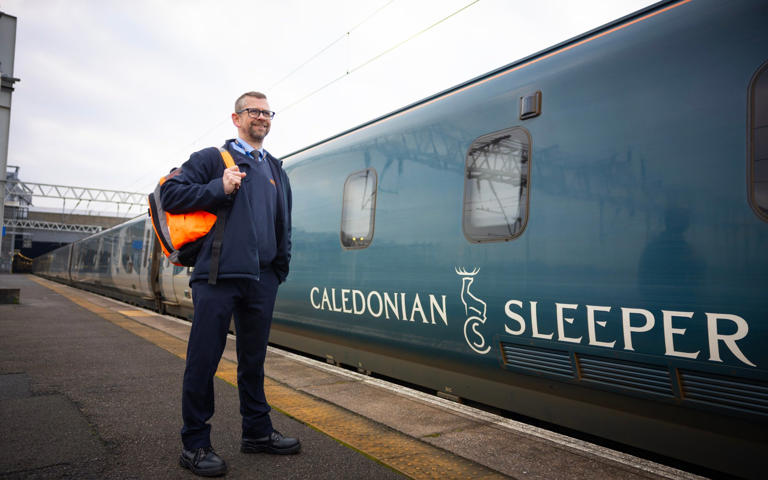
Caffeine and sugar aren’t enough during a 12-hour overnight stint driving the Caledonian Sleeper train. “It’s how we stay awake in those early hours – whistling and shouting.”
Thomas has driven the “Cally Sleeper” from London to Scotland for six years, topping up his hours by driving freight trains.
The service has run overnight trains between Scotland and London since 1873, with the “Lowlander” route between London and Edinburgh and the “Highlander” route to Aberdeen, Inverness and Fort William.
The sleeper operates on five routes, six nights a week. Each route, from London to a selection of locations in Scotland, takes around 11 hours. A bunk bed twin room on the luxury train can cost more than £250, but seated coaches are available for bargain hunters
It’s a special route to drive, says Thomas. “At the end, you see these people who’ve been asleep, trusting you all night. They get off to their holidays, their families. It’s rewarding, even if you do just have to push through sometimes.”
His section of the Caledonian Sleeper “Highlander” route isn’t as scenic as the northern drives over the Cumbrian Fells, Thomas admits. He sets off from Euston at 9.15pm, but changes with another driver when he reaches Preston just after midnight. To take him home, he switches with a different southbound (“Lowlander”) driver at 3am to get him back to Euston for 7.30am.
Thomas follows the West Coast Main Line through Rugby, Stafford and Lancashire. If there’s planned maintenance, he takes the East Coast instead. Most drivers don’t get to vary their routes, he adds, so “we’re lucky that way”.
‘You can pay your mortgage’
Thomas makes £79,000 a year – just above the national £76,327 average for train drivers in Britain, according to figures from the Office for National Statistics (ONS). He feels comfortable supporting his family alongside his wife, who also works full-time, and their two sons.
“You can pay your mortgage. It’s a safe place to be, but we’re not going to retire to the Bahamas,” says Thomas, who lives in South London.
He adds: “There are guys here for 40 years who worked decades for peanuts for the promise of a decent [final salary] pension. These days, [many] new starters are on defined contribution schemes with additional voluntary contributions unless you opt out.”
Train drivers are now among the best-paid jobs in Britain, ONS figures indicate, alongside chief executives, pilots and head teachers.
Labour agreed to a 15pc pay rise for train drivers across the country in 2024 following two years of bitter union disputes and strikes. Official estimates given to Parliament suggested this would cost the taxpayer £135m. Taxpayers pay drivers’ salaries via subsidies given to train companies.
Drivers faced diminishing public support in the run-up to the agreement, YouGov polling found at the time, with 54pc of British people opposed to train driver strikes. Thomas says: “You sometimes detect people saying, ‘You’d go sick at the drop of a hat. You don’t go to work.’ Actually, we bend over backwards to keep things moving because there’s a pride in that.
“We have collective bargaining done for us by [our union] Aslef, with agreed rates of different operators. Whether the public thinks the salaries are surprisingly high or not often comes down to the understanding of the level of responsibility, training and commitment required for the role and whether it is seen as a specialist profession rather than semi-skilled manual work.”
‘Never considered a career as a train driver’
Thomas works a maximum of 13 consecutive 12-hour shifts, with 12 hours between each shift, according to strict regulations. Drivers for GB Railfreight, the rail freight operator Thomas works for, are contracted to a four-day work week, but shifts vary.
Teenagers can now drive trains after the Department for Transport lowered the minimum age to take on the role in Britain from 20 to 18, a move made amid concerns over driver shortages.
But Thomas never considered a career as a train driver as a teenager in the 90s. “I was in sixth form in 1996-7. If I’d said I wanted to be a train driver, my parents would have said, ‘You’re mad; you’ve got As and Bs,’” he says.
“Salaries for train drivers until the 1980s and 1990s were very low. It wasn’t on my radar until a few years before I made the leap. I went into it with my eyes open. Some people come in now who’ve been persuaded by a parent.”
Thomas instead graduated with a law degree from Newcastle University in 2000 and became a business studies teacher in inner-city London. The job was rewarding, and he says he still uses the mentoring skills he learnt.
But new teachers were quickly leaving the industry, and schools were struggling. With 30 years until his pension, “I wasn’t sure if I could do it,” he explains.
Thomas had friends in the rail industry, and his father liked railways, so he began to look for opportunities and never looked back. “If you’re going to trade one career for life for another, this is the one,” he says. “It’s a tough job, but it’s worth it.”
The test where most fail
Train drivers come from a surprising range of backgrounds, he says. Some colleagues hold degrees and previous careers like he does, while others joined straight out of school. Besides being a dream job for many children, Thomas notes that the career offers security, union protection and a technical skill set. He wasn’t surprised to find out how competitive every vacancy was.
The industry-standard psychometric test is where most aspiring drivers fail. The process is brutal, and if you fail the test three times, “you’re out; you won’t be a train driver,” Thomas explains.
Around 4,000 prospective drivers take the one-day standardised test every year, which assesses cognitive skills, response times, multitasking, and several requirements at once, according to 2022 Office of Rail and Road figures. Trainees can retake a failed test after 12 months and, for a final time, after five years.
He started as a shunter – someone who moves railway wagons around a yard and assembles and breaks down trains – at GB Railfreight in 2014. By 2017, he had qualified as a driver, and in 2019, he began working on the sleeper service. He has since moved between passenger and freight driving.
Drivers spend most of their 12-hour shifts alone, fully responsible for a complicated machine and hundreds of lives inside it, and in Thomas’s case, usually in the dead of night.
“The passengers come up occasionally and say hello, but we’re mostly behind the scenes. It’s a very unusual job, and it’s something we’re all pretty proud to do,” Thomas says.
They need to be able to function calmly in isolated situations – but when things go wrong, the community that exists between train drivers is vital.
Thomas adds: “The Huntingdon incident with the individual on board with the knife: one of the crew onboard communicated the nature of the issue with the driver, and the driver communicated to the signaller, asking for emergency assistance. But working out how to get that when you’re travelling 130mph, that’s a hard thing to do.
“We call it skill fade. You learn about a lot of unlikely circumstances in training. But sometimes you’ve not actually done that thing in five years, so we message in group chats and help each other.”
