







| Re: High Streets - thriving, changing, dying in 2026? Posted by Marlburian at 06:28, 5th October 2026 |     |
Since I wrote above about my trip into Reading, there's been a flurry of posts on the local NextDoor site about pickpockets working in a particular locality in the town centre; they can get very aggressive when challenged. The police "are aware of the situation".
| Re: High Streets - thriving, changing, dying in 2026? Posted by Bob_Blakey at 09:45, 3rd October 2026 | |
It may be entirely possible that the solution to the loss of banks and/or post offices in smaller population centres is copying the Sidmouth Banking Hub:
https://sidmouth.gov.uk/directory/sidmouth-banking-hub/
In the case of Sidmouth, of course, it helps that the population has a high level of financial clout.
| Re: High Streets - thriving, changing, dying in 2026? Posted by WelshBluebird at 17:28, 2nd October 2026 | |
Car parking is now subject to a charge, which the feedback I get from my occasional chats with a couple of businesses has had a detrimental effect on their trade.
Although there is quite a lot of research to show that shopkeepers habitually overestimate the number of customers who come by car:
“While only 6.6% of shoppers traveled to the streets by car, on average traders [shopkeepers] estimated 21.6% of their customers use this mode; a discrepancy of 15%… Further they underestimate transit, pedestrian, and bicycle travel by 8.1%, 6.2% and 3% respectively.”
(from https://ggwash.org/view/96602/survey-most-shopkeepers-shoppers-overestimate-car-use, which has lots of interesting links)
To be honest I think 90% of the High Street problem is online shopping. We buy stuff from Amazon and eBay and the like, not Debenhams or BHS or Woolworths. Town centres are just too big for modern shopping habits. The only options are to major on the visitor destination/experience angle - as JohnM says, "having a pedestrianized high street during most of the day made it magnitudes nicer as a place to shop/loiter" - or to shrink the town centre. Much better to turn town centre buildings over to residential use, where the residents might spend time and money in the town centre, than to build acres of new suburbia where the residents will just drive to Tesco.
Exactly this. Of course high streets are struggling - we've replaced them with the internet!
The ones that are managing to do well still are offering something you can't replace digitally. Be that a more niche / independent shopping experience (like on Gloucester Road in Bristol) or by leaning into more cafes / bars / restaurants (again something Gloucester Road has going for it) or by pivoting entirely into things that really do make people want to leave their homes and do in person (which is why you are seeing a lot of these activity bars now, or another Bristol example being the temporary skate park where the old Debenhams used to be that also has some pool tables, pinball machines and is serving some food and drink too).
| Re: High Streets - thriving, changing, dying in 2026? Posted by Chris from Nailsea at 17:02, 2nd October 2026 | |
See also:
Many years ago, walking in to work in an office in central Bristol, on the pavement, I was startled by the imperious ringing of a bicycle bell behind me. Instinctively, I stepped to my right - causing the impatient cyclist to also swerve even further to the right. He thus took a purler, over the handlebars, head first into a pile of empty cardboard boxes outside a shop. I merely continued my saunter into work, while quietly sniggering to myself. 

CfN.


| Re: High Streets - thriving, changing, dying in 2026? Posted by Marlburian at 16:35, 2nd October 2026 | |
I made a rare visit into Reading town centre this morning. Within a hundreds yards from where I got off the bus I saw three two-wheelers being ridding illegally on the pavement and got jostled by a girl intent on her mobile phone. I went to Go Outdoors to find that it was closing down in January after a rebrand a year or two ago (a larger store in south Reading closed in 2022). M & S, JD Sports and John Lewis didn't have what I wanted (admittedly very specific items). Twice I ran the gauntlet of a large team of charity-muggers collecting for a cause I do not support. There was a street musician playing some very loud sounds that I did not like. There were other cases of anti-social and illegal cycling, in some cases by masked riders. And there were several rough-sleepers lying on the pavement with blankets over their heads.
So an underwhelming experience. ( I should add that I used to be a very keen cyclist, have generously supported charities, have given £5 and £10 notes to accomplished street musicians, and back in the 1980s twice-daily passed through "Cardboard City" near Waterloo Station.)
On the plus side, I liked the new main library where I spent 90 minutes using a PC faster than my outdated model (though I could have gone to the branch 20 minutes walk from my home), and the lady bus driver on my trip home was exceptionally pleasant.
| Re: High Streets - thriving, changing, dying in 2026? Posted by Mark A at 11:29, 30th September 2026 | |
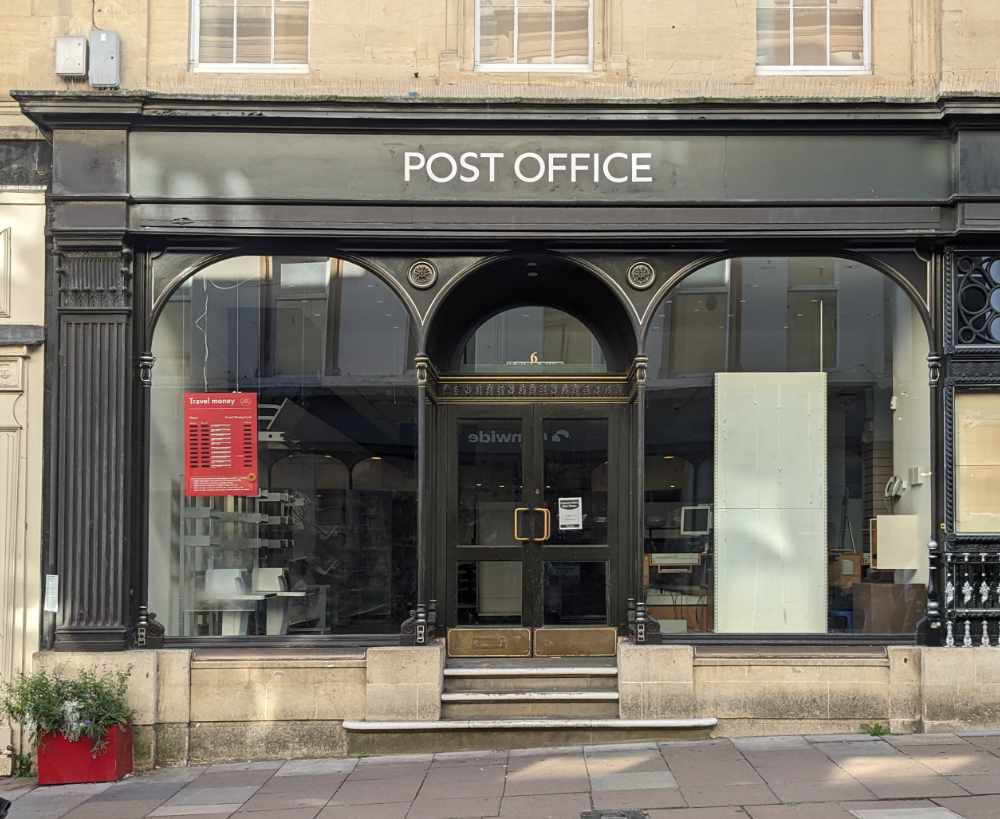
Bath's most recent iteration of 'Post office'. That aside, you wonder how losing that slew of shops impacts magazine sales.
| Re: High Streets - thriving, changing, dying in 2026? Posted by bradshaw at 09:00, 30th September 2026 | |
While Bridport has a few closed shops, in general the High Streets(E, W & S) are in quite good shape. Yes, three of the big four banks have closed -HSBC is now a cafe bar, Nat West is being converted to a gallery and Barclays is a soft furnishing business. We still have TSB and Nationwide.
We have three artisan bakeries, three butchers as well as numerous small, local shops. A bookshop seems to do well despite Waterstones. RKL Tools, a hardware store has just moved to larger premises
Waitrose is on West Street and there is Spar and Premier on East Street. Morrisons, Lidl and Coop are on the edge of the town. Saturdays often sees Marion and I parking at the Coop and walking into town.
We even have a Hatter, Snooks, which still makes them on site. There is also a music store.
The cafe society is thriving with a number of artisan coffee shops preferred to Costa and #1.
There is an arts centre, an Art Deco cinema and a theatre, in an old chapel.
On top of this there is the twice weekly street market.
Trading estates occupy a number of old industrial site not far from the town centre offering a wide range of services.
We also have a busy Post Office
| Re: High Streets - thriving, changing, dying in 2026? Posted by grahame at 07:55, 30th September 2026 | |
At the risk of looking just the same as other pictures ... from Swindon last month:
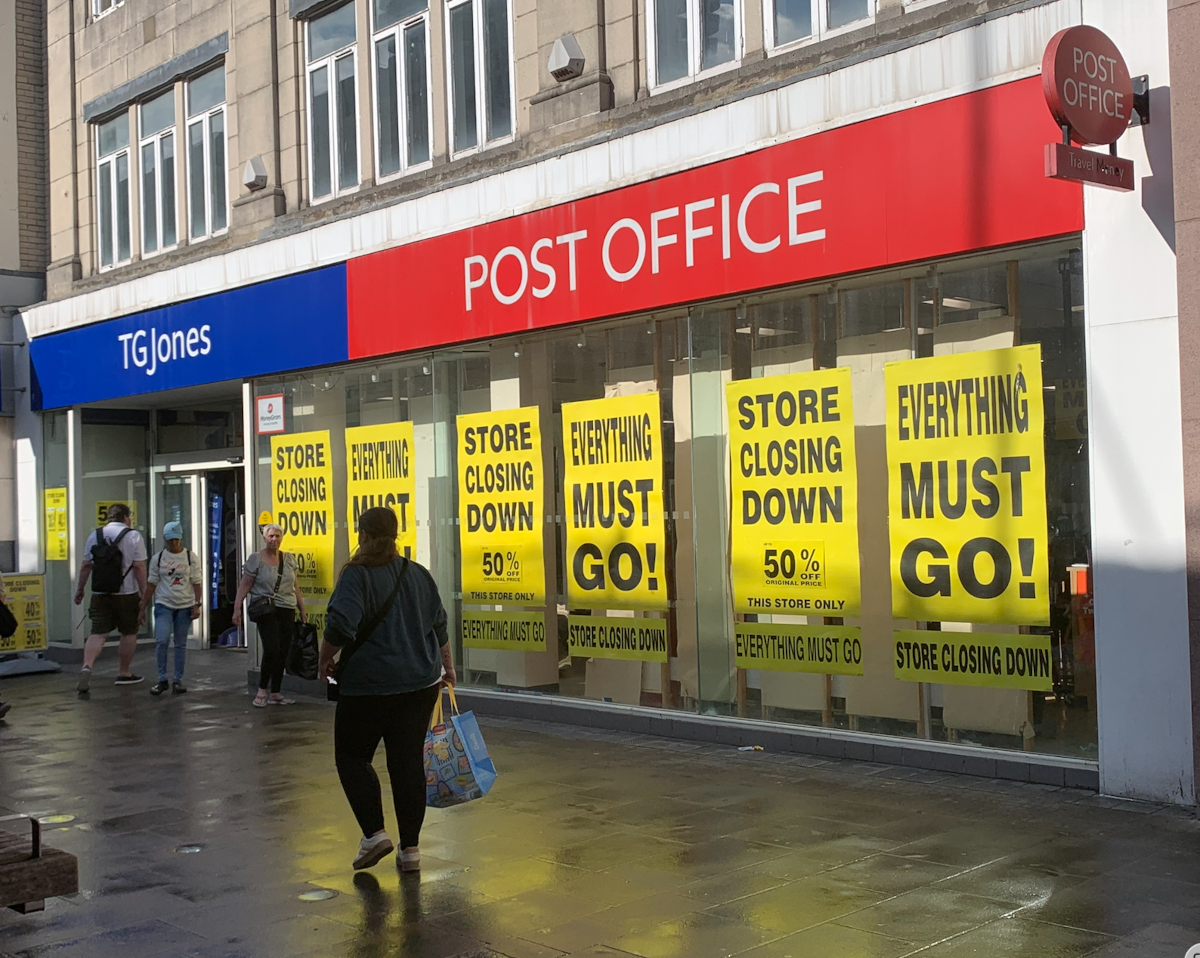
Selling the WHSmith High Street outlets to a company that had closed Claires and Factory Shops has had not unexpected results. Whilst there are cals for new ventures / subPostmasters to set up, that's not an investment I would encourage friends of family to make. It may be that there are more premises available if there's the predicted reduction in vape shops, but somehow I would find it hard to trust the company that's inherited a persona from the Horizon scandal, and has now found itself loosing lots of customer serving outlets with the TGJones closures.
| Re: High Streets - thriving, changing, dying in 2026? Posted by TaplowGreen at 07:47, 30th September 2026 | |
My view from Nailsea (a town of over 20,000 residents): I'll try to keep this brief, as most of the points have been covered in posts above.
Nailsea High Street is a shadow of what it used to be, when we first moved here, over thirty years ago. Long gone are the independent family butchers, bakers, greengrocers.
Similarly, long gone are the 'big four' Banks, and Nationwide Building Society, each closing down over the years. We now have a 'banking hub', sponsored by the Post Office - but that's only available for pre-booked face-to-face appointments with a representative from a bank, not for any financial transactions.
Many of the previous independent shops in the High Street are now Turkish barbers (I've lost count of them), Chinese takeaways (there are now two, after a Chinese restaurant directly across the street from one of them closed), two nail bars and a myriad of charity shops.
Car parking is now subject to a charge, which the feedback I get from my occasional chats with a couple of businesses has had a detrimental effect on their trade.
Nailsea High Street is a shadow of what it used to be, when we first moved here, over thirty years ago. Long gone are the independent family butchers, bakers, greengrocers.
Similarly, long gone are the 'big four' Banks, and Nationwide Building Society, each closing down over the years. We now have a 'banking hub', sponsored by the Post Office - but that's only available for pre-booked face-to-face appointments with a representative from a bank, not for any financial transactions.
Many of the previous independent shops in the High Street are now Turkish barbers (I've lost count of them), Chinese takeaways (there are now two, after a Chinese restaurant directly across the street from one of them closed), two nail bars and a myriad of charity shops.
Car parking is now subject to a charge, which the feedback I get from my occasional chats with a couple of businesses has had a detrimental effect on their trade.
I think you've done a very good job there of describing the decline of the typical English High Street over the last decade.
The Banks, family owned/better quality retailers (and pubs) are closing/moving online (to be fair in many ways reflecting the behaviour of their customers), and it seems to be accelerating.
But hey, boom time for Turkish barbers and vape shops!

| Re: High Streets - thriving, changing, dying in 2026? Posted by Chris from Nailsea at 23:58, 29th September 2026 | |
Perhaps, with the benefit of hindsight, putting Post Offices inside branches of WHSmith wasn't such a bright idea, after all?
| Re: High Streets - thriving, changing, dying in 2026? Posted by Chris from Nailsea at 23:55, 29th September 2026 | |
Bad news from Exmouth, though.
From the BBC:
Exmouth Post Office closure sparks fears for residents

The Post Office said it hoped to open a replacement branch as soon as possible
People in Exmouth have spoken of their dismay as the town's post office prepares to close, with some warning vulnerable residents could be left struggling to access essential services.
The branch, which operates inside the town's TGJones store - formerly WHSmith, is shutting on Monday as part of a wider closure programme affecting about 150 stores across the UK.
The Post Office said it hoped to open a replacement branch as soon as possible, although the process could take about six months. It said in the meantime customers would be directed to branches at Littleham Cross and Budleigh Salterton.
Kate Wilcox, who campaigned against moving the post office into WHSmith several years ago, said residents had long feared the arrangement would leave the town without a permanent service. She said: "Exmouth has a population of 36,000 and rising and it's an elderly demographic and quite honestly people need the post office services."
Wilcox said the loss of banks and building societies in recent years had increased the importance of the post office, particularly for people who relied on face-to-face banking and government services. She said: "The town has been hollowed out by the closure of banks and building societies, the closure of the post office."
Wilcox also warned the closure would be particularly difficult for older and disabled residents who may struggle to travel to alternative branches. She said: "These are the people that actually need a friendly face to say, all right my love, what can I do?"
(BBC article continues)
The Post Office said it hoped to open a replacement branch as soon as possible
People in Exmouth have spoken of their dismay as the town's post office prepares to close, with some warning vulnerable residents could be left struggling to access essential services.
The branch, which operates inside the town's TGJones store - formerly WHSmith, is shutting on Monday as part of a wider closure programme affecting about 150 stores across the UK.
The Post Office said it hoped to open a replacement branch as soon as possible, although the process could take about six months. It said in the meantime customers would be directed to branches at Littleham Cross and Budleigh Salterton.
Kate Wilcox, who campaigned against moving the post office into WHSmith several years ago, said residents had long feared the arrangement would leave the town without a permanent service. She said: "Exmouth has a population of 36,000 and rising and it's an elderly demographic and quite honestly people need the post office services."
Wilcox said the loss of banks and building societies in recent years had increased the importance of the post office, particularly for people who relied on face-to-face banking and government services. She said: "The town has been hollowed out by the closure of banks and building societies, the closure of the post office."
Wilcox also warned the closure would be particularly difficult for older and disabled residents who may struggle to travel to alternative branches. She said: "These are the people that actually need a friendly face to say, all right my love, what can I do?"
(BBC article continues)
| Re: High Streets - thriving, changing, dying in 2026? Posted by Chris from Nailsea at 22:45, 29th September 2026 | |
Ah, Nailsea has a post office. Good.
... at the risk of winding you up even more, so does the (almost) adjoining village of Backwell - population around 6,000.
CfN.
| Re: High Streets - thriving, changing, dying in 2026? Posted by REVUpminster at 22:04, 29th September 2026 | |
All the places mentioned you can google earth and have a walkabout before deciding.
| Re: High Streets - thriving, changing, dying in 2026? Posted by JayMac at 21:09, 29th September 2026 | |
We can look forward to more empty premises in the coming months.
From 1st October 2026 the new Vaping Products Duty comes in to effect. New stock of vape liquids (regardless of nicotine content) will have a £2.20 per 10ml of liquid duty applied. I buy a product called 'shortfills' in 100ml bottles. This is a mix of propylene glycol and vegetable glycerin with food grade flavouring. To these I add 2x 10ml 18mg nicotine shots, giving me 120ml liquid with 3mg nicotine strength. Currently this costs me £10 a bottle with the nicotine shots free. And that lasts about a month.
After current stock is exhausted and replaced with duty applied stock this will cost me £36.40 per 120ml with £26.40 going to the Govt. Retailers will no longer be permitted to offer free nicotine shots with shortfills. Needless to say, I've stocked up.
Those looking to quit regular tobacco by switching to vape may well be put off by the new costs. Government's aim is to replace the ever falling revenue from tobacco duty. I don't believe their arguments about youth vaping though as an excuse to tax.
I spoke with staff in my regular vape shop today, in Taunton. They will likely be closing some of their bricks and mortar locations, and concentrating more on the sale of vape hardware in the remaining stores. The industry body reckon as many as 50% of physical High St vape stores will close in the next two years.
On the wider point about High Sts dying I believe they're evolving as shopping habits and products sold change, and we are currently in a long term state of flux. And we're ALL to blame. Retailers need customers. If they don't come you haven't a viable business.
| Re: High Streets - thriving, changing, dying in 2026? Posted by bobm at 20:45, 29th September 2026 | |
| Re: High Streets - thriving, changing, dying in 2026? Posted by Richard Fairhurst at 11:18, 29th September 2026 | |
Car parking is now subject to a charge, which the feedback I get from my occasional chats with a couple of businesses has had a detrimental effect on their trade.
Although there is quite a lot of research to show that shopkeepers habitually overestimate the number of customers who come by car:
“While only 6.6% of shoppers traveled to the streets by car, on average traders [shopkeepers] estimated 21.6% of their customers use this mode; a discrepancy of 15%… Further they underestimate transit, pedestrian, and bicycle travel by 8.1%, 6.2% and 3% respectively.”
(from https://ggwash.org/view/96602/survey-most-shopkeepers-shoppers-overestimate-car-use, which has lots of interesting links)
To be honest I think 90% of the High Street problem is online shopping. We buy stuff from Amazon and eBay and the like, not Debenhams or BHS or Woolworths. Town centres are just too big for modern shopping habits. The only options are to major on the visitor destination/experience angle - as JohnM says, "having a pedestrianized high street during most of the day made it magnitudes nicer as a place to shop/loiter" - or to shrink the town centre. Much better to turn town centre buildings over to residential use, where the residents might spend time and money in the town centre, than to build acres of new suburbia where the residents will just drive to Tesco.
| Re: High Streets - thriving, changing, dying in 2026? Posted by Mark A at 09:46, 29th September 2026 | |
Ah, Nailsea has a post office. Good. Bath: your move.
| Re: High Streets - thriving, changing, dying in 2026? Posted by Chris from Nailsea at 22:39, 28th September 2026 | |
My view from Nailsea (a town of over 20,000 residents): I'll try to keep this brief, as most of the points have been covered in posts above.
Nailsea High Street is a shadow of what it used to be, when we first moved here, over thirty years ago. Long gone are the independent family butchers, bakers, greengrocers.
Similarly, long gone are the 'big four' Banks, and Nationwide Building Society, each closing down over the years. We now have a 'banking hub', sponsored by the Post Office - but that's only available for pre-booked face-to-face appointments with a representative from a bank, not for any financial transactions.
Many of the previous independent shops in the High Street are now Turkish barbers (I've lost count of them), Chinese takeaways (there are now two, after a Chinese restaurant directly across the street from one of them closed), two nail bars and a myriad of charity shops.
Car parking is now subject to a charge, which the feedback I get from my occasional chats with a couple of businesses has had a detrimental effect on their trade.
A rank of what used to be shops towards the upper end of the High Street is being extensively refurbished / rebuilt: I haven't been able to ascertain, but I think they're going to become residential.
To end on a more positive note: we do have some successful and clearly busy shops on our High Street: Waitrose at one end, Tesco at the other, a Boots the Chemist (and Opticians) and a Post Office.
Chris from Nailsea.
| Re: High Streets - thriving, changing, dying in 2026? Posted by REVUpminster at 19:12, 28th September 2026 | |
Al Murray call Spoons, chicken shop, vape shop; the chlamydia triangle when he was at The Princess Theatre Torquay recently.
There are six theatres in Torbay that do attract people from far and wide but the shops are generally closed at that time.
| Re: High Streets - thriving, changing, dying in 2026? Posted by bobm at 17:45, 28th September 2026 | |
In Swindon town centre with Sainsburys and Marks & Spencer closing there is just a smallish Tesco supermarket and an Iceland with its limited range for food shopping. On the outskirts of the pedestrianised area there are some smaller supermarkets catering for some local communities although a few have been closed or lost their alcohol licences for various transgressions.
TG Jones and the Post Office within closed earlier this month. There is a large Boots, a Primark and a couple of discount stores.
With bank branches up the hill in Old Town closing, the town centre has retained its full range of banks and most building societies.
Of the two Wetherspoons pubs, one is reported as being up for sale.
There are three Greggs, various coffee shops, barbers of many persuasions, vape and charity shops - although some of the latter have closed.
Then of course there is a new bus interchange to bring throngs of people to them.
| Re: High Streets - thriving, changing, dying in 2026? Posted by Witham Bobby at 17:25, 28th September 2026 | |
The town centre of Evesham has been laid-waste. Many shops and former banks are empty, and those that are open are mostly scruffy and unloved
Shopowners would, I'm sure, point to sky-high, non-negotiable rents, business rates (for those who don't qualify for small business relief), parking charges and loss of parking spaces, over zealous and downright objectionable parking enforcement personnel (I once parked my car no more than an inch over the line, protruding into empty, unmarked space - the warden enjoyed telling me that by rights he should give me a ticket for not parking in the lines), absent street cleaning, and traffic congestion all as being very unhelpful to their cause, as well as some "out of town" bigger-name stores and supermarkets. We've also lost several of the town centre's once prolific pubs
Which leaves the town looking post-apocalyptic with it's vacant shops and banks, rubbish, vegetation, Turkish barbers and vape shops, nail bars, charity shops (who don't pay business rates and often convince landlords not to charge any or much rent) and mobile-phone accessory shops. All of which might just as well not be there, for all the actual customers they appear to attract
No one wants to go to the town centre any more
Complete failure
| Re: High Streets - thriving, changing, dying in 2026? Posted by REVUpminster at 11:12, 28th September 2026 | |
I was bought up in Torquay and went to school in Paignton in the 1960s and remember them as vibrant places. Between 1999 and 2005 I visited Torquay once a month and my initial impression was how both had deteriorated, especially their shopping centres. Many fine houses in Torquay had become multi-occupancy, with half-a-dozen sets of bins permanently outside them.
Torbay livened up in the holiday season, which provided jobs, but in the winter ...
In 1961 we moved to Sidmouth which, perhaps, was a bit too much of a retirement area for a teenager, especially in the winter. Recently the Daily Express acclaimed it for its large number of independent shops.
(In 1970 I moved from Sidmouth to Basingstoke. with four months in digs at the Great Western Hotel, next to the station. The town was then developing to accommodate "London overspill ...)
Torbay livened up in the holiday season, which provided jobs, but in the winter ...
In 1961 we moved to Sidmouth which, perhaps, was a bit too much of a retirement area for a teenager, especially in the winter. Recently the Daily Express acclaimed it for its large number of independent shops.
(In 1970 I moved from Sidmouth to Basingstoke. with four months in digs at the Great Western Hotel, next to the station. The town was then developing to accommodate "London overspill ...)
This is all true. Torbay lost 5000 high paid jobs almost overnight. My parents-in-law bungalow sold for £90,000 in 2001 and £180,000 in 2006; then the property crash of 2008 it went down and did not recover to that price until 2014. The population of Torbay did not increase at all between 2001 and 2011. It has gone up since with thousands of new houses on greenfield sites, but the cheap hotels and B&Bs became a prey for outside councils to house their homeless and buy properties on the new estates.
That's why in the thread I started below regarding about a new 4* hotel is so important as the council expect it to release more brownfield sites and not put so much pressure on greenfield sites because the government says they are not providing enough housing land.
| Re: High Streets - thriving, changing, dying in 2026? Posted by Marlburian at 10:09, 28th September 2026 | |
I was bought up in Torquay and went to school in Paignton in the 1960s and remember them as vibrant places. Between 1999 and 2005 I visited Torquay once a month and my initial impression was how both had deteriorated, especially their shopping centres. Many fine houses in Torquay had become multi-occupancy, with half-a-dozen sets of bins permanently outside them.
Torbay livened up in the holiday season, which provided jobs, but in the winter ...
In 1961 we moved to Sidmouth which, perhaps, was a bit too much of a retirement area for a teenager, especially in the winter. Recently the Daily Express acclaimed it for its large number of independent shops.
(In 1970 I moved from Sidmouth to Basingstoke. with four months in digs at the Great Western Hotel, next to the station. The town was then developing to accommodate "London overspill ...)
| Re: High Streets - thriving, changing, dying in 2026? Posted by grahame at 08:52, 28th September 2026 | |
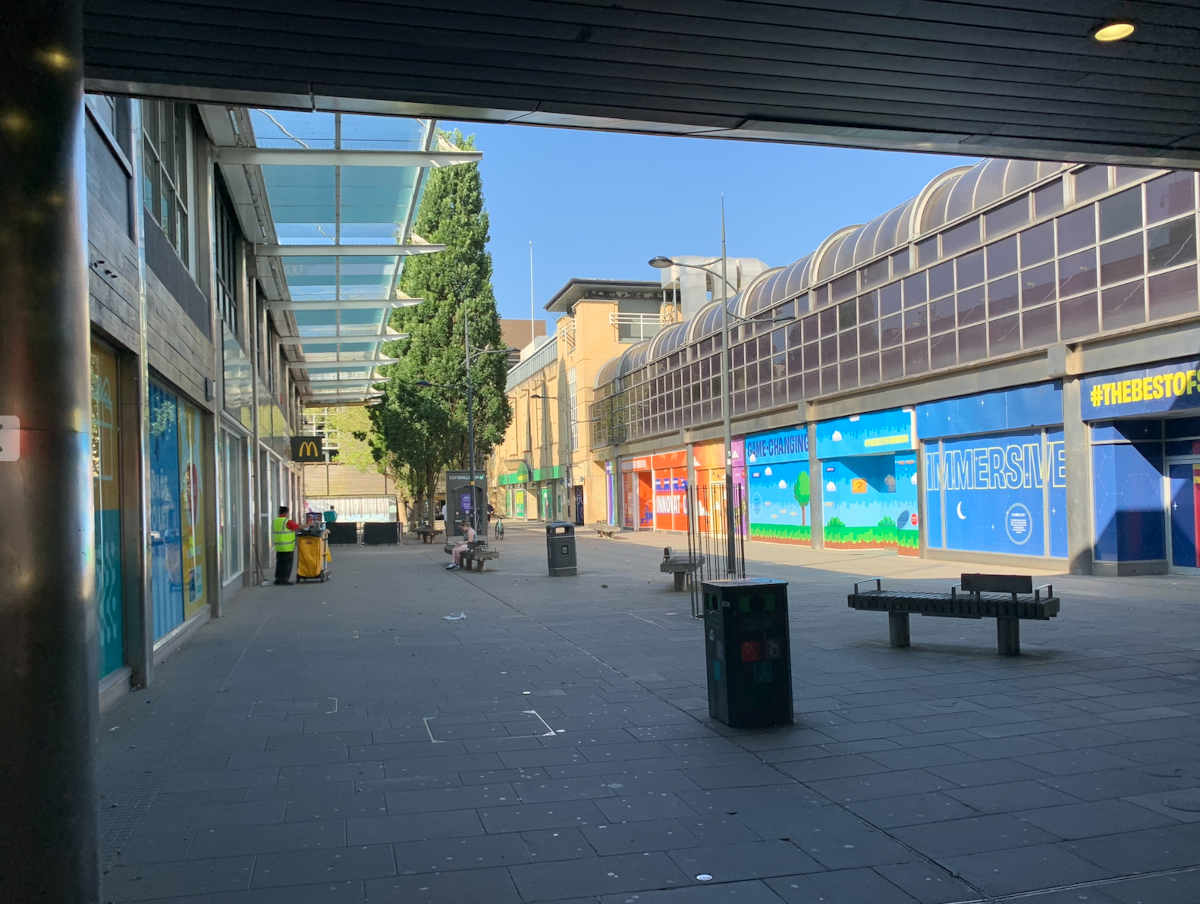
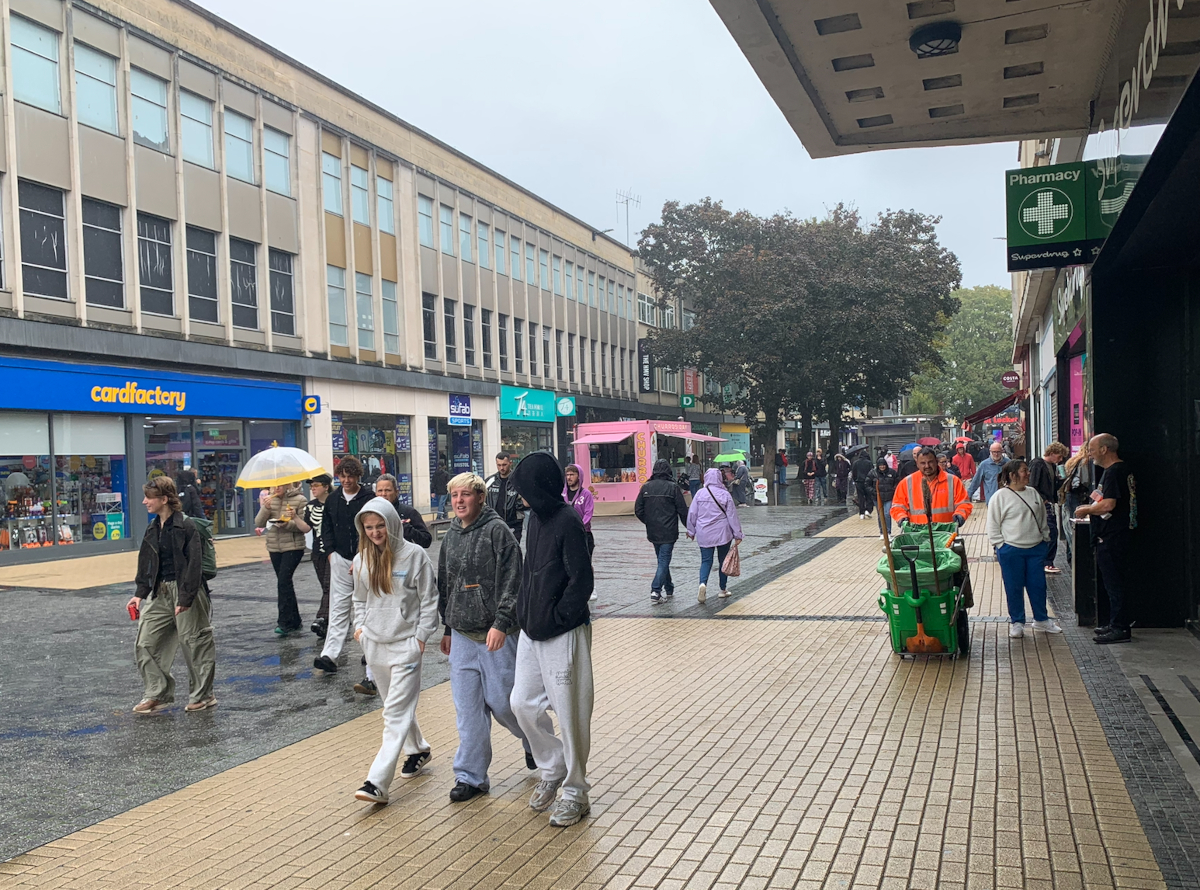
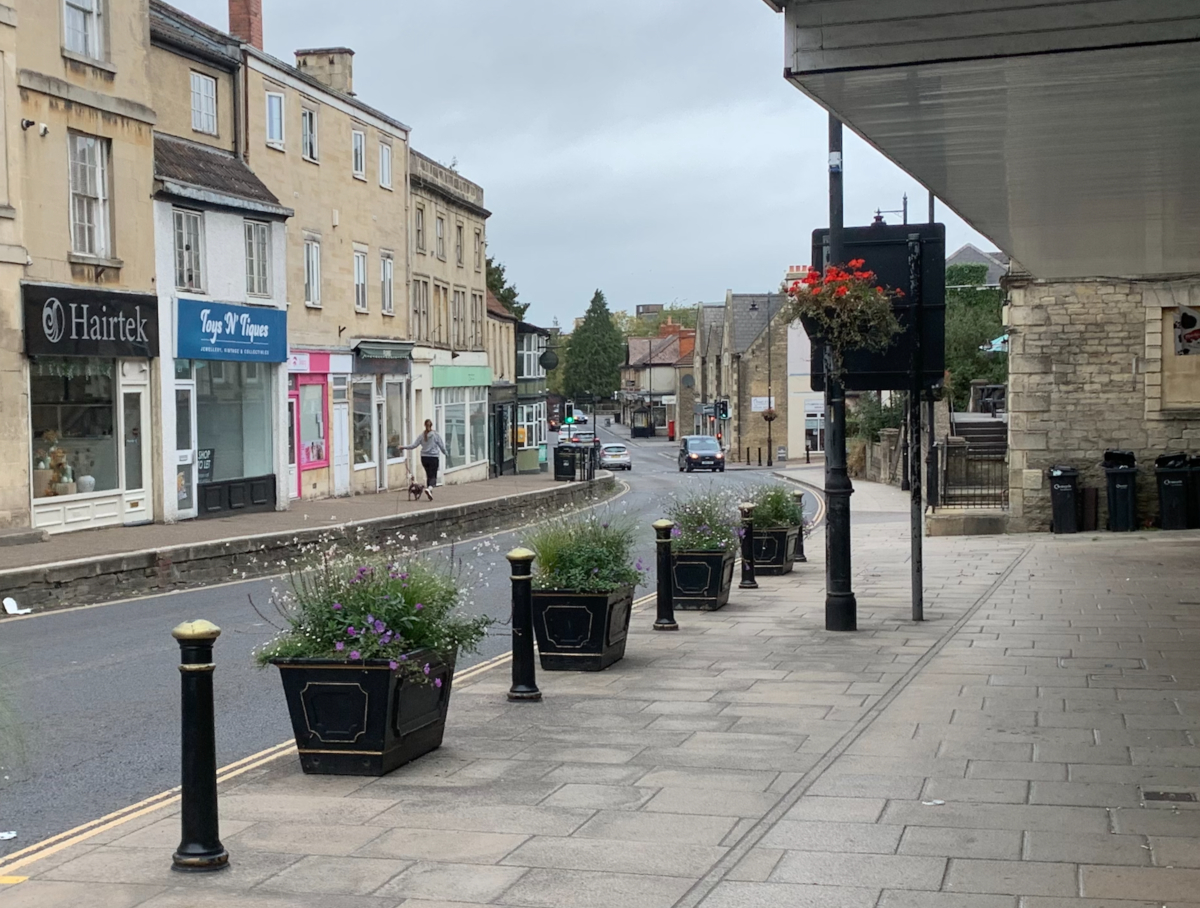
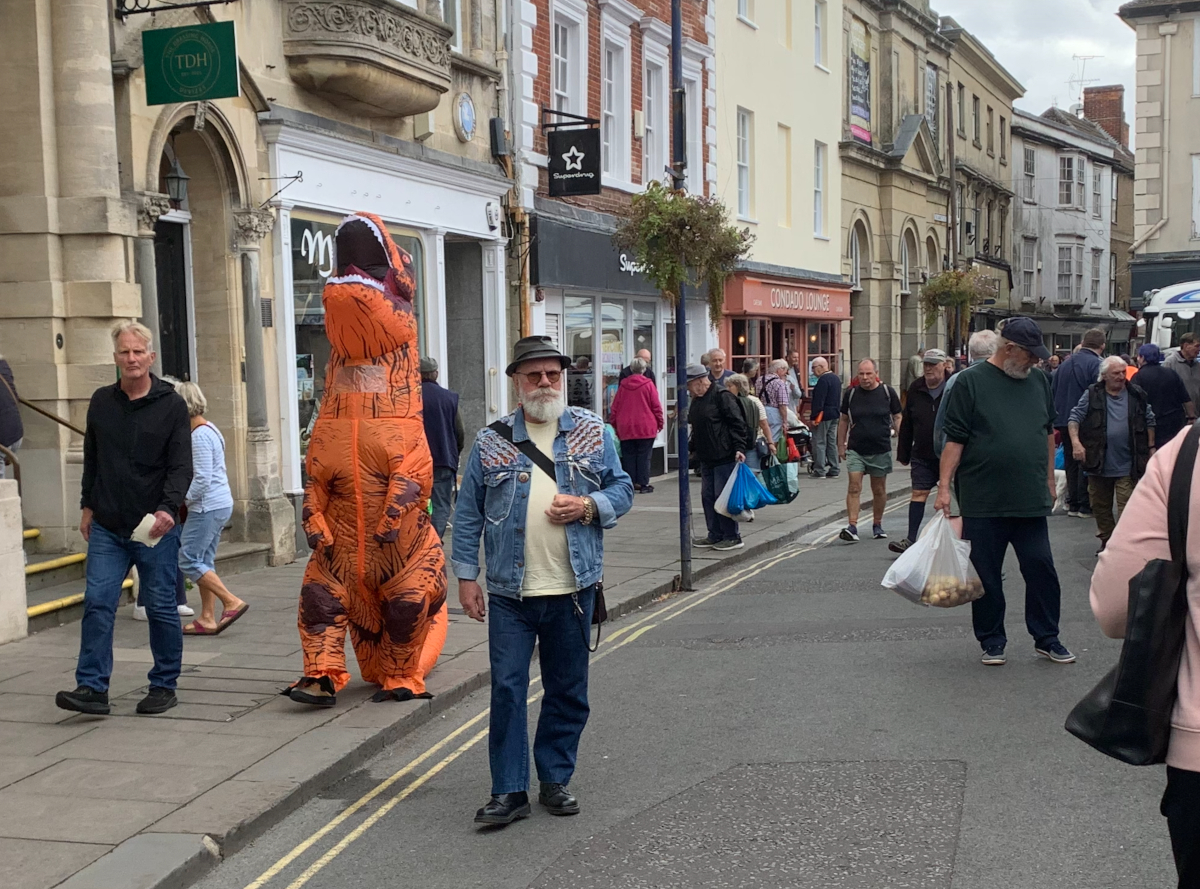
That 4th picture, looking down Melksham Bank Street - I'm curious when that was taken as I don't think I've ever seen it with so little traffic, in daylight anyway. As you know if you spin round 180 you're looking towards the Costa and the actual High Street, and it tends to be a bit busier around there in my limited (compared to yours) experience.
Saturday, 19th September 2026 at 08:53:25 - headed for the 09:09 to s Westbury
I lived in Chippenham for a few years and having a pedestrianized high street during most of the day made it magnitudes nicer as a place to shop/loiter. Difficult to know how they could do the same with Melksham, but they might have thought that about Chippenham before they did it.
Indeed - I would be an advocate of some [more] pedestrianisation in Melksham. Avon Place is tiny but a pedestrian precinct of sorts. Now you could take the back of the Cooper Tires site, widening or a new road crossing the river just to the north of the Adventure Centre and joining the Calne Road at the top of the KGV park to pull a great deal of the through traffic, and traffic from the east of Melksham housing headed for Chippenham and Bath out of the Town Centre.
| Re: High Streets - thriving, changing, dying in 2026? Posted by JohnM at 08:32, 28th September 2026 | |
That 4th picture, looking down Melksham Bank Street - I'm curious when that was taken as I don't think I've ever seen it with so little traffic, in daylight anyway. As you know if you spin round 180 you're looking towards the Costa and the actual High Street, and it tends to be a bit busier around there in my limited (especially compared to yours) experience.
I lived in Chippenham for a few years and having a pedestrianized high street during most of the day made it magnitudes nicer as a place to shop/loiter. Difficult to know how they could do the same with Melksham, but they might have thought that about Chippenham before they did it.
| Re: High Streets - thriving, changing, dying in 2026? Posted by REVUpminster at 07:50, 28th September 2026 | |
Paignton, I saw on Saturday WH Smith or now TG Jones is closing down. I think the one in Torquay has gone. October Today's Railways had a small section on the closures and the difficulty of buying magazines. Where can you buy a newspaper in central Paignton? Only Tesco Express, and a shop near the level crossing. Paignton station had a very good bookstall/newsagent but that closed over twenty years ago.
There are no banks in Torquay although a hub in Fleet Street is shortly to open. There is a hub in Brixham. Paignton still has all but one (NatWest) of it's banks.
Torbay council have a policy, because they expect 50% of retail to disappear to concentrate the shops in specific areas and the rest to ultimately become residential. This is really noticeable in Torquay where shops are closing in the upper parts of Union Street to the lower part and Fleet Street nearer the sea with plans for residential development or conversion to residential of the vacated shops.
It's an irony that in Paignton most of the shops, cafes, in the Torbay Road, Hyde Road, and Palace Avenue are converted houses.
Ps
Torquay and Paignton are the 3rd and 4th largest towns in Devon, although official government figures reverse this by including a number of areas such as Cockington, Torbay Hospital, Torre into Paignton figures. It must distort all sorts of government figures. If you add in Brixham the total is 140,000 people the second biggest area and population in Devon although Exeter will soon overtake population wise.
| High Streets - thriving, changing, dying in 2026? Posted by grahame at 06:20, 28th September 2026 | |
From the BBC, in depth
My hometown shows that high streets have to change or die
Some town centres seem to have and be succeeding, and others indeed are no longer attracting people to visit businesses there, which are closing their shopfronts. Is there rhyme or reason to which "High Street" might succeed and which might not?
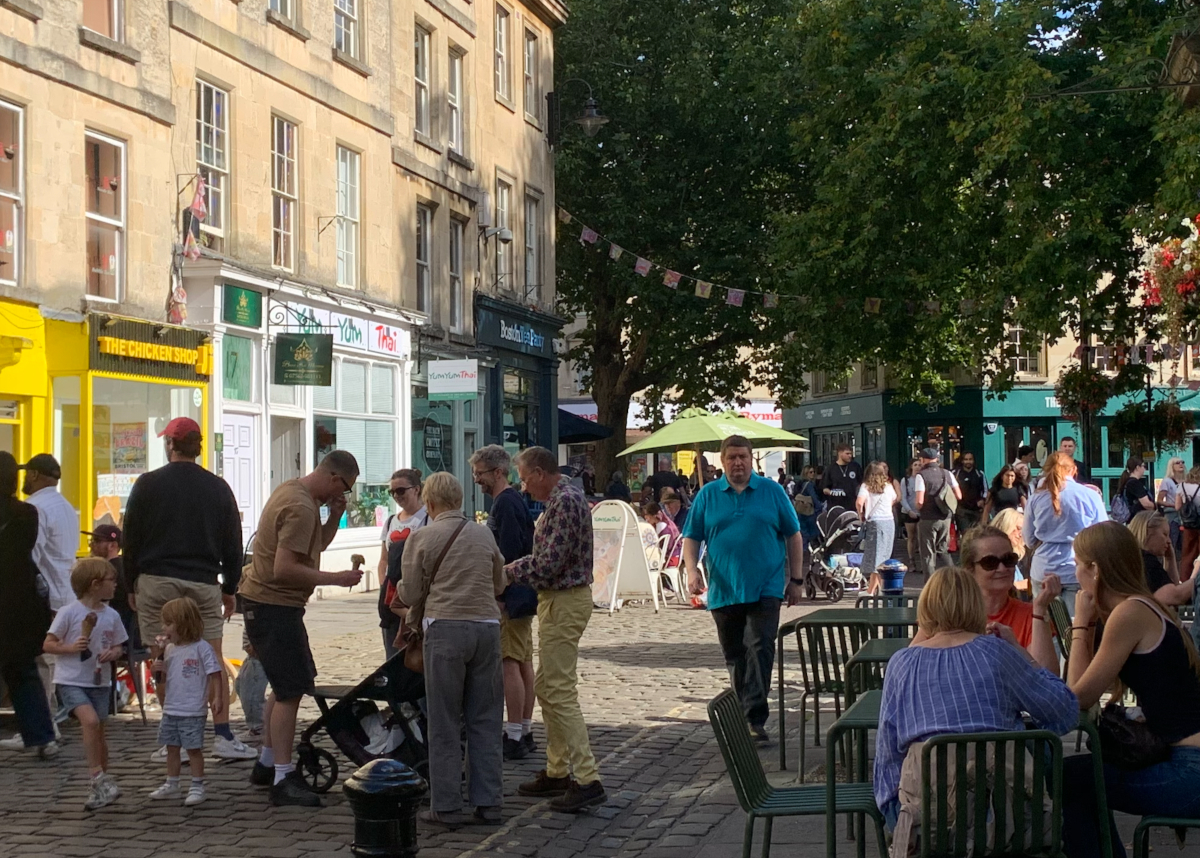
Looking locally, I see both Devizes and Bath vibrant when I visit them, but I don't get the same feeling from Melksham. Having said which, we have quite a number of store fronts which are for products for immediate access / use within the hour. People hereabouts grumble about "yet another barber" and "not ANOTHER takeaway" and yet - with a handful of specific locations - they tend to last longer. One severe issue tends to be car parking for pickups, and changing regulations seem to effect them significantly.
How are High Streets close to you faring? How do you account for this?