






| Same word - different meanings - public transport context Posted by grahame at 09:14, 2nd September 2026 |     |
1. What's the difference between a Group (1a) and a group (1b)?
2. What's the difference between a shop (2a) and our Shop (2b)?
3. What's the difference between a station (3a) and a station (3b)?
4. What's the difference between a stop (4a) and a halt (4b)?
5. What's the difference between reading (5a) and Reading (5b)?
Words are confusing with dual use!
1a. The West Wiltshire Rail Users Group (WWRUG) is an independent association which aims to maintain and enhance the rail services serving West Wiltshire. Meetings are held throughout the year, with prominent speakers from the rail industry, local government, and other relevant organisations giving informative talks on rail related issues. Members receive a regular newsletter in return for an annual subscription, currently £8 for an individual and £10 for a family. Web site at https://www.wwrug.org.uk . Next meeting 16th September 2026, when we welcome Peter West, who for many years was the Franchise Manager for Great Western for many years at the Department for Transport. 19:00 for 19:30 at the Bethesda Church Hall in Trowbridge - about 100 yards from the station. Guests are welcome, but are asked to pay £2 per meeting (better to pay £8 up front to join?)
1b. A Facebook group is a community that connects people who share specific interests, and the West Wiltshire Rail Users (Facebook) group - note the lower case "G" - does exactly that. https://www.facebook.com/groups/wwrug I'm one of the administrators of that group, and the other two are both WWRUG Committee members. It's public readable and so everyone can read and with admin approval anyone can contribute - and we welcome and encourage people to do so, to chat, to post news, to share views on west Wiltshire rail topics.
1c. Online group members are welcome at public Group meetings and encouraged to join - bringing them quarterly meetings, newsletters and opportunities to get involved deeper at committee level, which is the heart of our campaigning and partnering for better services.
2a. A shop is where you buy things. Typically lots of products all in one place where you go (physically or online) to select what you want, and which becomes yours for a financial consideration.
2b. Our Great Western Coffee Shop (where you are reading this) has nothing to sell financially. A coffee shop is somewhere to sit around and chant with others of similar interests - to share stories and news, exchange views and learn from them in a convivial and friendly environment. The Great Western Coffee Shop is - in this vein - a meeting point of like and enquiring minds with a shared interest in rail travel across the wedge of Great Britain from London headed west to the Cotswolds, Wessex, South Wales and the South West of England. And being a meeting point amongst friends, talk often turns to related topics such as other public transport, trains in neighbouring area and sometimes beyond, and other topics of tangential interest in the areas covered
3a. A railway Station is a place where trains stop - a station on the railway.
3b. A fire station is - you hope - the last place you'll find a fire!
4a. A stop is where a train or bus stops for passengers to get on or off; on the railway, it's very much the same as a "railway station" and in the UK can range from Waterloo with goodness knows how many platform and passenger to Beauly where the only platform is so short that just one door of the train opens.
4b. A halt is where a train will stop - but only if there are passengers to drop off or pick up. There are a few remaining in GWR territory, including Lympstone Commando and Dilton Marsh where the passenger numbers are such that the train almost always stops anyway. Others in the GWR area include places like Thornford, Sandplace and Portsmouth Arms (which is nowhere near Portsmouth) on lines that are quieter too, and the "halt" designation and operation remains logical.
5a. reading is a skill we learn - before or at school for the majority of us in the UK these days - that sets us up for life's progress in modern society
5b. Reading is a town in Berkshire, and one of the biggest railway interchanges in the region. South Western Railway, Cross Country, Great Western and Transport for London all operate scheduled passenger trains there, and for most people travelling, who's operating the train you arrive on and the train you leave on is of little practical consequence. You just need to know who's website to drill down into for things like delay/repay claims, and if you're travelling as a group whether you groupsave ticket is valid on this or that operator.
Try also -
6. Flying Scotsman v The Flying Scotsman
7. Passenger v Customer
8. Barry Island v Barry Links
9. Usual (standard English usage) and usual as in "more trains needing repair than usual"
| Re: Same word - different meanings - public transport context Posted by GBM at 12:22, 2nd September 2026 | |
2b. Our Great Western Coffee Shop (where you are reading this) has nothing to sell financially. A coffee shop is somewhere to sit around and chant with others of similar interests - to share stories and news, exchange views and learn from them in a convivial and friendly environment.

| Re: Same word - different meanings - public transport context Posted by GBM at 12:24, 2nd September 2026 | |
Maybe we chant together for a more reliable and frequent service!
| Re: Same word - different meanings - public transport context Posted by grahame at 13:52, 2nd September 2026 | |
Maybe we chant together for a more reliable and frequent service!
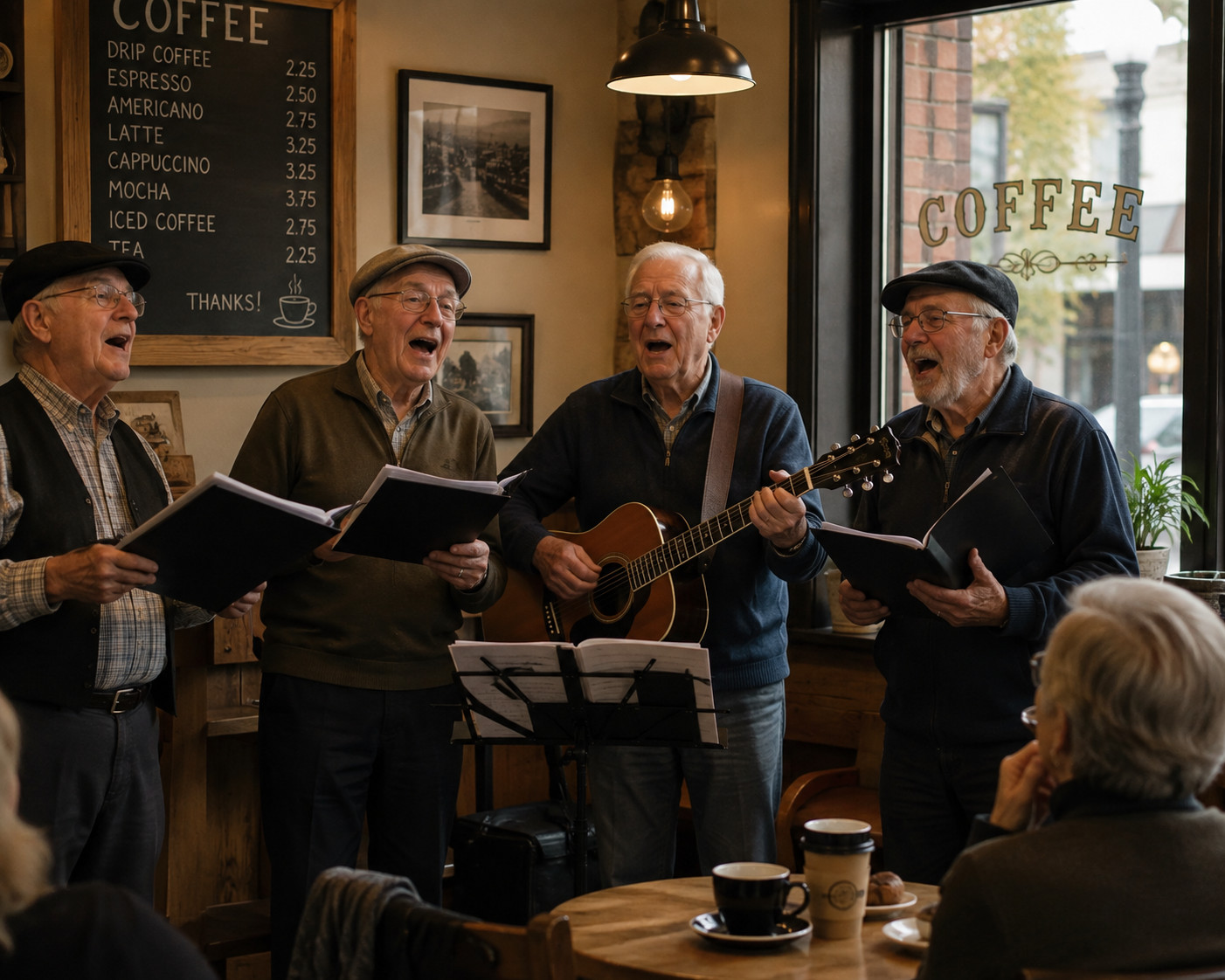
This image is a fictional representation of us singing in a the Coffee Shop
| Re: Same word - different meanings - public transport context Posted by bobm at 16:50, 2nd September 2026 | |
Some fictional prices for the coffee too!
| Re: Same word - different meanings - public transport context Posted by Mark A at 20:12, 2nd September 2026 | |
Do I need to count the fingers?
| Re: Same word - different meanings - public transport context Posted by grahame at 20:54, 2nd September 2026 | |
Do I need to count the fingers?
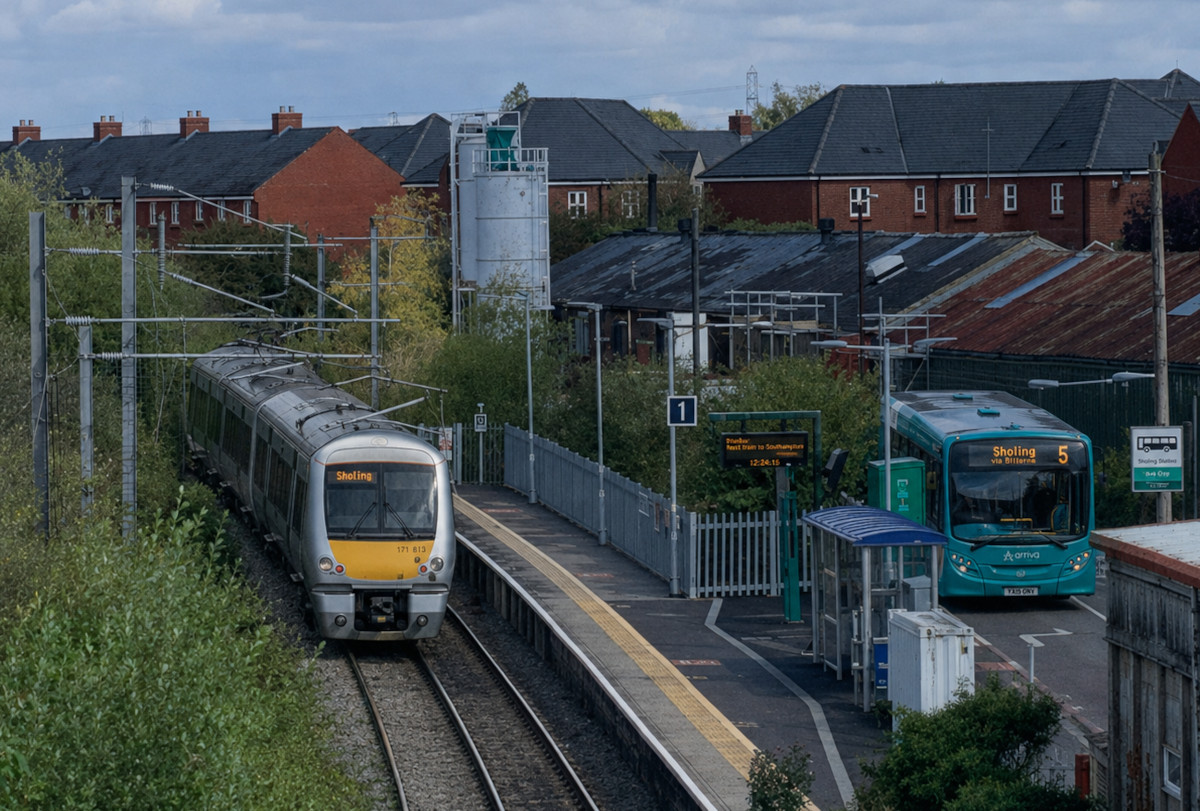
Look right to me ... though I wonder about the third rail in this concept picture from the same stable
| Re: Same word - different meanings - public transport context Posted by bobm at 21:04, 2nd September 2026 | |
Third rail and overhead. Brings a new meaning to bi-mode.
| Re: Same word - different meanings - public transport context Posted by TaplowGreen at 21:33, 2nd September 2026 | |
Maybe we chant together for a more reliable and frequent service!
This image is a fictional representation of us singing in a the Coffee Shop
Midnight train to Georgia?
| Re: Same word - different meanings - public transport context Posted by stuving at 23:32, 2nd September 2026 | |
5a. reading is a skill we learn - before or at school for the majority of us in the UK these days - that sets us up for life's progress in modern society
5b. Reading is a town in Berkshire, and one of the biggest railway interchanges in the region. South Western Railway, Cross Country, Great Western and Transport for London all operate scheduled passenger trains there, and for most people travelling, who's operating the train you arrive on and the train you leave on is of little practical consequence. You just need to know who's website to drill down into for things like delay/repay claims, and if you're travelling as a group whether you groupsave ticket is valid on this or that operator.
5b. Reading is a town in Berkshire, and one of the biggest railway interchanges in the region. South Western Railway, Cross Country, Great Western and Transport for London all operate scheduled passenger trains there, and for most people travelling, who's operating the train you arrive on and the train you leave on is of little practical consequence. You just need to know who's website to drill down into for things like delay/repay claims, and if you're travelling as a group whether you groupsave ticket is valid on this or that operator.
There's more fun to be had with (in not in) Reading. Go one stop towards Waterloo and you reach Earley so, especially if you are not too picky about spellings ...
Obviously you can play games with announcements - "this train will soon arrive at at the next stop, Earley" - "but it's late!" But there was also a shop - the Reading Early Learning Centre - once on Broad Street and then inside Mothercare (now it's just branding inside The Entertainer and both Tesco Extras). I have not yet discovered the adult literacy service that operated at the Earley Learning Reading Centre, but surely it must have existed?
| Re: Same word - different meanings - public transport context Posted by CyclingSid at 12:17, 3rd September 2026 | |
7. Passenger v Customer
Reeks of consultant speak. If they are called passengers it reminds everybody what the object of the exercise is. Had similar situation in the health service, they are patients and want a medical issue sorted.
Customer tends lean towards a sales opportunity, coffee shops on stations, over-priced branches of M&S in hospitals.
5. What's the difference between reading (5a) and Reading (5b)?
. A play on words by the Kennet https://artuk.org/discover/artworks/reading-piece-303210/search/2026--works:reading-piece/page/1/view_as/grid| Re: Same word - different meanings - public transport context Posted by Chris from Nailsea at 22:45, 3rd September 2026 | |
This image is a fictional representation of us singing in the Coffee Shop
A couple of points from me, if I may?
That is not the admin team here on the Coffee Shop forum.

The two words - which are not the same, but which do rile me, when they are misused - are 'regular' and 'frequent'. Regular could be 'once every one hundred years', whereas frequent could be 'every few minutes', for example.
CfN.

| Re: Same word - different meanings - public transport context Posted by bobm at 03:12, 4th September 2026 | |
The two words - which are not the same, but which do rile me, when they are misused - are 'regular' and 'frequent'. Regular could be 'once every one hundred years', whereas frequent could be 'every few minutes', for example.
…and staying on topic, there is regular coffee.
| Re: Same word - different meanings - public transport context Posted by grahame at 05:49, 4th September 2026 | |
The two words - which are not the same, but which do rile me, when they are misused - are 'regular' and 'frequent'. Regular could be 'once every one hundred years', whereas frequent could be 'every few minutes', for example.
Indeed - we had a regular train service from Swindon to Westbury from December 2006 to December 2013 - it ran about every 12 hours. It has improved since then, but to this day we remain in search of a frequent service, for example as suggested by the Bath and Wiltshire Metro which would run every 30 minutes, though perhaps not completely regular because there might be a gap from 00:30 to 04:30 midweek.
| Re: Same word - different meanings - public transport context Posted by bobm at 07:33, 4th September 2026 | |
As has been said… frequently.
| Re: Same word - different meanings - public transport context Posted by stuving at 12:49, 4th September 2026 | |
7. Passenger v Customer
Reeks of consultant speak. If they are called passengers it reminds everybody what the object of the exercise is. Had similar situation in the health service, they are patients and want a medical issue sorted.
Customer tends lean towards a sales opportunity, coffee shops on stations, over-priced branches of M&S in hospitals.
One of the fixed ideas behind privatisation was that BR was run, by engineering and operations, for its own benefit and convenience not the passengers'. I remember hearing one of the privatisers explaining at the time that they had designed the process with minimal barriers to entry (capital both as money and owning equipment), so a group of outsiders could bid for a franchise.
The idea was to bring in people from a retail background, where (it is said) the customer is king and always right. The switch to "customer" was meant to reflect this change of ethos of those running the TOCs, which should start to recognise that they were customer-facing.
Of course that totally misses some important differences. With competent logistics (which you can hire in) to maintain stock levels, you can retail stuff out of your stock room that was manufactured ages ago. It stays as made, with no involvement of the manufacturers until it's been bought and taken (or sent) home.
You can't retail a rail journey that way. You have to keep manufacturing the journey after it's been sold, and while it's going on, until it has finally been consumed. So the manufacturing staff (both engineering and operations) need to be involved throughout. This makes life more difficult, but can't be wished out of relevance.
| Re: Same word - different meanings - public transport context Posted by grahame at 19:23, 17th September 2026 | |
Post includes AI generated content (?)
Testing - adding a tag [AI] which you may include in your posts. More to follow about that in "News and Assistance"
| Re: Same word - different meanings - public transport context Posted by PhilWakely at 20:53, 17th September 2026 | |
Do I need to count the fingers?
Look right to me ... though I wonder about the third rail in this concept picture from the same stable
"There is a larger than usual gap between the train and the platform at this station......."
| Re: Same word - different meanings - public transport context Posted by GBM at 08:06, 18th September 2026 | |
Melksham 2035?
| Re: Same word - different meanings - public transport context Posted by grahame at 08:36, 18th September 2026 | |
Melksham 2035?
That's the plan ... should include an [AI] tag:
Post includes AI generated content (?)
but I have only just programmed that option in to the Coffee Shop.
