






Recent Public Posts - [guest]
| Re: Aberfan disaster - 21 October 1966 (split topic from another discussion) In "The West - but NOT trains in the West" [374979/31667/31] Posted by Chris from Nailsea at 00:06, 10th May 2026 |      |
From the BBC:
I took one of the most famous photos of the Aberfan disaster – it still haunts me
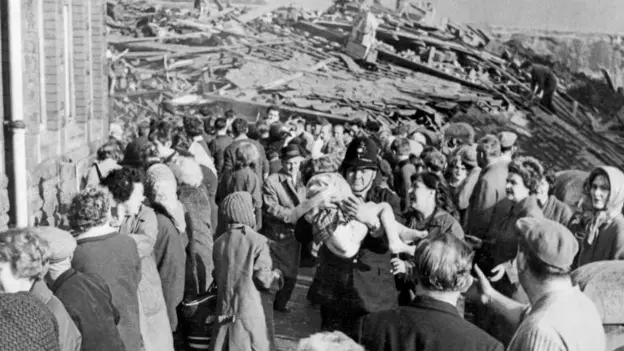
Susan Maybank is carried by PC Victor Jones, in a photo taken by Mel Parry after the Aberfan disaster - Image © Getty Images
This story contains upsetting details that some may find distressing
It's one of the most famous photographs capturing the aftermath of the Aberfan disaster, but its success has come to haunt the man who took it.
Mel Parry was an 18-year-old apprentice photographer with the Merthyr Express newspaper when he found himself in the south Wales village on his way to work.
He began documenting one of the darkest days in Welsh history when a colliery spoil tip collapsed, slid down a mountain and engulfed the village's primary school and surrounding houses, killing 116 children and 28 adults and leaving a lasting scar in Wales.
In the photo, PC Victor Jones can be seen carrying eight-year-old Susan Maybank to safety. The woman to the right is Susan's aunt.
Parry snapped the image but "wished he'd never taken it", later abandoning his career as a photographer.
In December 1966, the picture won the British News Photographer of the Year award, but Parry said he put the success of the image down to chance.
He had been on a bus travelling through Aberfan when someone shouted that the school had fallen down. "I happened to be the person on the spot, unfortunately."
With only one roll of film in his camera, he borrowed more from the chemist and began taking photos almost immediately.
One frame would come to define the tragedy on newspaper front pages around the world, though Parry did not realise it at the time. "I never, ever remember taking it. The camera was above my head and upside down. I couldn't see what I was taking," he said.
The PC in the image was Aberfan's local officer. Susan Maybank is in his arms. Her body is limp and she is barefoot. Around them a crowd of relatives and rescuers look on.
The film was rushed away by a young Western Mail reporter, Alun Michael, who would later become Wales' first first minister - he'd raced to the scene from Cardiff.
Parry spotted his colleague from the sister paper. "He threw the film across the line of miners. He didn't even know he'd taken it," Michael recalls.
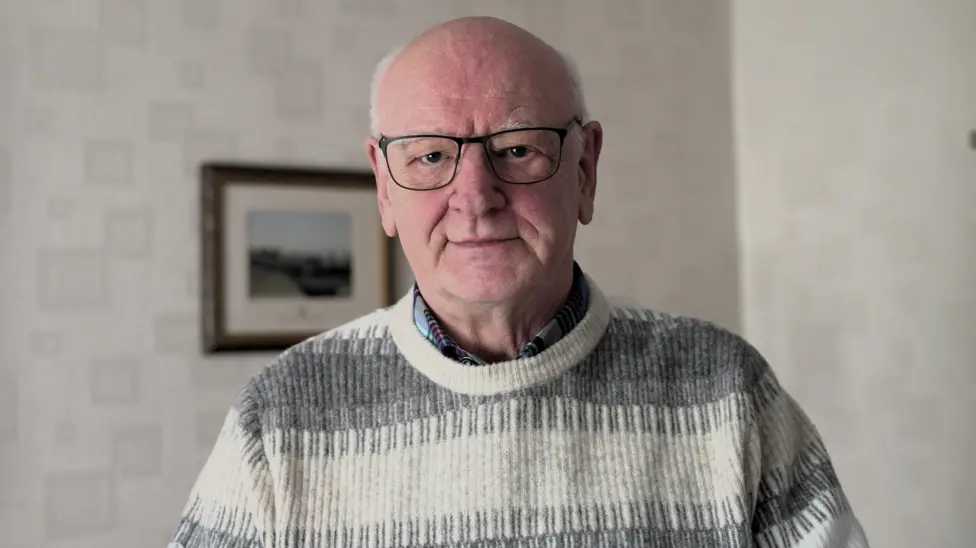
Despite his photo of Susan Maybank's rescue appearing on front pages and winning awards, Mel Parry says he wished he'd never taken it
Within hours, the photograph was printed on the front page of the South Wales Echo, and soon after appeared in newspapers around the world. The picture brought recognition for Parry, making him the youngest ever recipient of the British News Photographer of the Year award.
But the success always sat uneasy with him and contributed to his decision to abandon his photography career in the early 1970s. "It's a tragedy and unfortunately I ended up gaining from it," he said. "I wish I'd never taken it."
Days after the disaster, when his journalistic instinct had subsided, the enormity of the tragedy became clear. He had family in Aberfan and lost two cousins in the disaster.
"They were digging people out and unfortunately some were alive and some were dead. It's not something I would ever, ever want to go through again," Parry said.
Ahead of the 60th anniversary of the Aberfan disaster, Parry's photograph remains one of the defining images of the tragedy.
Will Troughton, curator of photography at the National Library of Wales, said its power lies in both its composition and its emotion.
"It is a very strong composition, which really makes people look at the picture and take in the detail. Your eye is drawn along the two rows of people and it's then you see the policeman holding the little girl." He added that the people are "looking stunned, they don't know what's happening, and in the middle of it, you've got this spark of hope".
Michael said the photograph captured something beyond the rescue of Susan that day. "It's a memory of the horror... but also the sense of pride."
Mine rescue workers and volunteers from across south Wales had rushed to help, digging through the debris. That sense of community "is one of the biggest strengths we have as a nation," Michael added.
Susan Maybank survived the disaster and was later reunited for tea with PC Jones and Parry. She died in 2025, and her family has chosen not to speak publicly.
The image remains inescapable for Parry as it reappears with every anniversary and retelling of the Aberfan disaster. "As I get older I get fed up with seeing the photograph. But when people see that photograph they can remember Aberfan and they can remember what was there, and I hope that out of that something good will come."
After being interviewed by BBC Wales, Parry decided to donate the photography award he received to Amgueddfa Cymru, Wales's national museum, which has collected items associated with the Aberfan disaster.
Susan Maybank is carried by PC Victor Jones, in a photo taken by Mel Parry after the Aberfan disaster - Image © Getty Images
This story contains upsetting details that some may find distressing
It's one of the most famous photographs capturing the aftermath of the Aberfan disaster, but its success has come to haunt the man who took it.
Mel Parry was an 18-year-old apprentice photographer with the Merthyr Express newspaper when he found himself in the south Wales village on his way to work.
He began documenting one of the darkest days in Welsh history when a colliery spoil tip collapsed, slid down a mountain and engulfed the village's primary school and surrounding houses, killing 116 children and 28 adults and leaving a lasting scar in Wales.
In the photo, PC Victor Jones can be seen carrying eight-year-old Susan Maybank to safety. The woman to the right is Susan's aunt.
Parry snapped the image but "wished he'd never taken it", later abandoning his career as a photographer.
In December 1966, the picture won the British News Photographer of the Year award, but Parry said he put the success of the image down to chance.
He had been on a bus travelling through Aberfan when someone shouted that the school had fallen down. "I happened to be the person on the spot, unfortunately."
With only one roll of film in his camera, he borrowed more from the chemist and began taking photos almost immediately.
One frame would come to define the tragedy on newspaper front pages around the world, though Parry did not realise it at the time. "I never, ever remember taking it. The camera was above my head and upside down. I couldn't see what I was taking," he said.
The PC in the image was Aberfan's local officer. Susan Maybank is in his arms. Her body is limp and she is barefoot. Around them a crowd of relatives and rescuers look on.
The film was rushed away by a young Western Mail reporter, Alun Michael, who would later become Wales' first first minister - he'd raced to the scene from Cardiff.
Parry spotted his colleague from the sister paper. "He threw the film across the line of miners. He didn't even know he'd taken it," Michael recalls.
Despite his photo of Susan Maybank's rescue appearing on front pages and winning awards, Mel Parry says he wished he'd never taken it
Within hours, the photograph was printed on the front page of the South Wales Echo, and soon after appeared in newspapers around the world. The picture brought recognition for Parry, making him the youngest ever recipient of the British News Photographer of the Year award.
But the success always sat uneasy with him and contributed to his decision to abandon his photography career in the early 1970s. "It's a tragedy and unfortunately I ended up gaining from it," he said. "I wish I'd never taken it."
Days after the disaster, when his journalistic instinct had subsided, the enormity of the tragedy became clear. He had family in Aberfan and lost two cousins in the disaster.
"They were digging people out and unfortunately some were alive and some were dead. It's not something I would ever, ever want to go through again," Parry said.
Ahead of the 60th anniversary of the Aberfan disaster, Parry's photograph remains one of the defining images of the tragedy.
Will Troughton, curator of photography at the National Library of Wales, said its power lies in both its composition and its emotion.
"It is a very strong composition, which really makes people look at the picture and take in the detail. Your eye is drawn along the two rows of people and it's then you see the policeman holding the little girl." He added that the people are "looking stunned, they don't know what's happening, and in the middle of it, you've got this spark of hope".
Michael said the photograph captured something beyond the rescue of Susan that day. "It's a memory of the horror... but also the sense of pride."
Mine rescue workers and volunteers from across south Wales had rushed to help, digging through the debris. That sense of community "is one of the biggest strengths we have as a nation," Michael added.
Susan Maybank survived the disaster and was later reunited for tea with PC Jones and Parry. She died in 2025, and her family has chosen not to speak publicly.
The image remains inescapable for Parry as it reappears with every anniversary and retelling of the Aberfan disaster. "As I get older I get fed up with seeing the photograph. But when people see that photograph they can remember Aberfan and they can remember what was there, and I hope that out of that something good will come."
After being interviewed by BBC Wales, Parry decided to donate the photography award he received to Amgueddfa Cymru, Wales's national museum, which has collected items associated with the Aberfan disaster.
That BBC article has more detail, for those interested.
| History of Bristol - Second World War bombing: one hour & five minutes of video In "The West - but NOT trains in the West" [374978/32007/31] Posted by Chris from Nailsea at 23:23, 9th May 2026 | |
Not related to the railways, particularly. History of Bristol - from YouTube at https://www.youtube.com/watch?v=YuH5R9kf54A
| Re: On tour, May 2026, Grahame In "The Lighter Side" [374977/31997/30] Posted by Chris from Nailsea at 21:52, 9th May 2026 | |
Thanks for your post, johnneyw.

Just to add some historic detail here - from Wikipedia: https://en.wikipedia.org/wiki/Maunsell_Forts
| Re: 13th December 2026 - Great Western returns to public ownership In "Across the West" [374976/31999/26] Posted by TaplowGreen at 21:50, 9th May 2026 | |
(Asking more in hope than expectation) - can anyone tell me how this, and GBR in general, will result in a better experience for customers?
If you read the articles in the railway press on the first integrated management structures set up in this current change, particularly the article on the Greater Anglia one in the May edition of Modern Railways, I think you will see the sort of savings that the management believe can be made through integration.
How would that result in a better experience for customers?
| Re: On tour, May 2026, Grahame In "The Lighter Side" [374975/31997/30] Posted by johnneyw at 21:44, 9th May 2026 | |
Indeed - Flushing / Vlissingen - same place, old and new names. Olau line used to run a ferry from here to Sheerness.
Indeed, I recall a short break in Middleburg using that route in the early 90s. The sea forts off the Kent coast made an imposing sight as we passed them in the mist.
| Re: The 08:19 only runs on alternate Saturdays In "Media about railways, and other means of transport" [374974/32006/49] Posted by Chris from Nailsea at 21:22, 9th May 2026 | |


| Re: New Oxford - Bristol direct service, ongoing developments and discussion In "Oxford, Didcot and Reading from the West" [374973/28355/22] Posted by ellendune at 21:16, 9th May 2026 | |
Rich Wilcox has tweeted/x'd -
Suspect that level crossing work will delay the service starting....
The ORR has approved GWR's bid to run two-hourly Weekday and Saturday services from Bristol to Oxford.
However, Network Rail has to implement risk measures at 13 level crossings before any GWR services can start
This only for a trial period - to end 2027 & ORR is quite clear that a "strong presumption of continuation of rights does NOT apply"
However, Network Rail has to implement risk measures at 13 level crossings before any GWR services can start
This only for a trial period - to end 2027 & ORR is quite clear that a "strong presumption of continuation of rights does NOT apply"
Suspect that level crossing work will delay the service starting....
By 2027 we can expect that GBR will determine whether these services continue not ORR.
| Re: New Oxford - Bristol direct service, ongoing developments and discussion In "Oxford, Didcot and Reading from the West" [374972/28355/22] Posted by bobm at 20:55, 9th May 2026 | |
Given those crossings were flagged in paragraph 12 of this document a year ago, I wonder how far that work has got.
https://www.orr.gov.uk/sites/default/files/2025-11/gwr-ltd-s22a-301st-sa-network-rail-representations.pdf
| Re: Ivybridge Station - services, facilities, incidents and events (merged topics, specific to Ivybr In "Shorter journeys in Devon - Central, North and South" [374971/104/24] Posted by Chris from Nailsea at 20:51, 9th May 2026 | |
... (with apologies for linking to the awful Herald website)
I don't even try to do that any more.

CfN.

| The 08:19 only runs on alternate Saturdays In "Media about railways, and other means of transport" [374970/32006/49] Posted by grahame at 20:19, 9th May 2026 | |
If you're going to commit a murder, you need to check your alibi with the timetable
https://www.facebook.com/reel/1708116853695465
| Re: New Oxford - Bristol direct service, ongoing developments and discussion In "Oxford, Didcot and Reading from the West" [374969/28355/22] Posted by ray951 at 19:30, 9th May 2026 | |
Rich Wilcox has tweeted/x'd -
Suspect that level crossing work will delay the service starting....
The ORR has approved GWR's bid to run two-hourly Weekday and Saturday services from Bristol to Oxford.
However, Network Rail has to implement risk measures at 13 level crossings before any GWR services can start
This only for a trial period - to end 2027 & ORR is quite clear that a "strong presumption of continuation of rights does NOT apply"
However, Network Rail has to implement risk measures at 13 level crossings before any GWR services can start
This only for a trial period - to end 2027 & ORR is quite clear that a "strong presumption of continuation of rights does NOT apply"
Suspect that level crossing work will delay the service starting....
And they wonder why the railways cost so much to run.
| Re: On tour, May 2026, Grahame In "The Lighter Side" [374968/31997/30] Posted by Chris from Nailsea at 18:42, 9th May 2026 | |
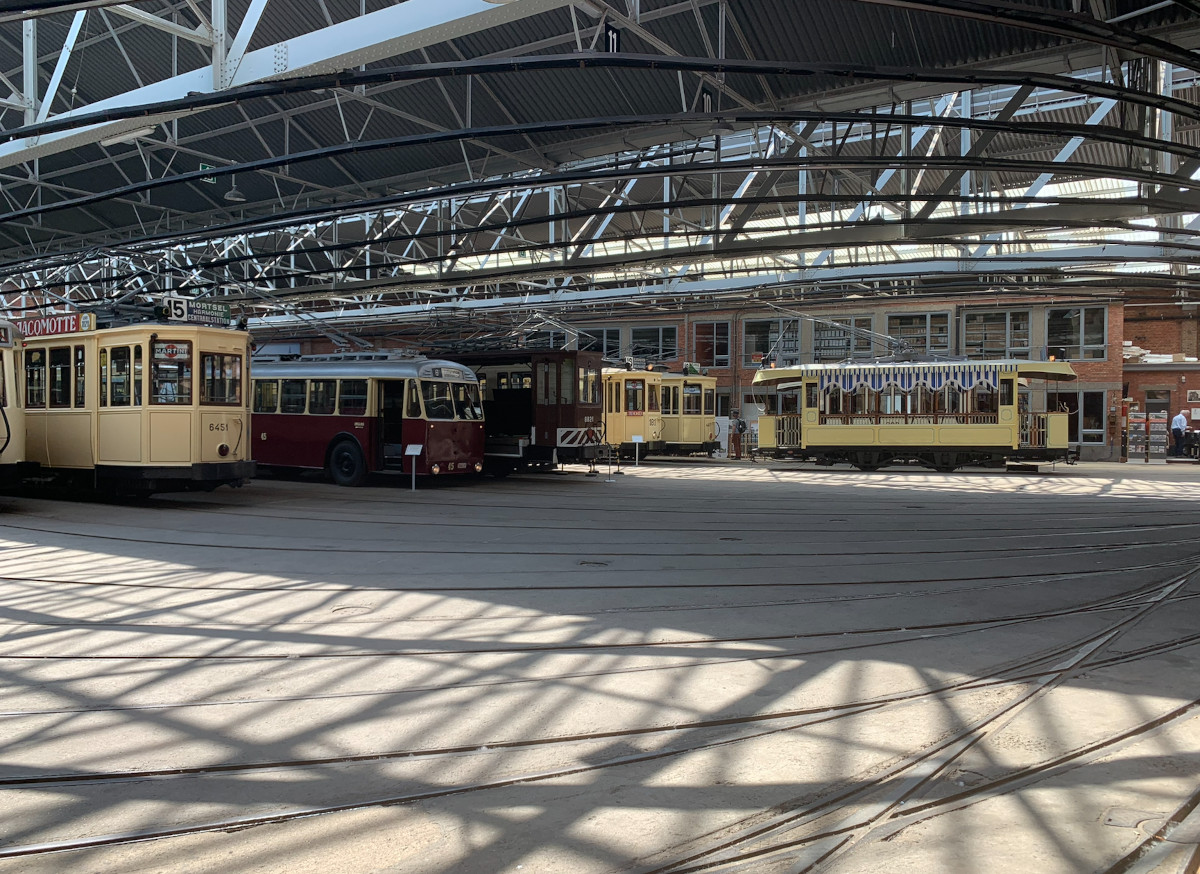
That has the air of a tram museum about it ...
| Re: On tour, May 2026, Grahame In "The Lighter Side" [374967/31997/30] Posted by grahame at 17:59, 9th May 2026 | |
Indeed - Flushing / Vlissingen - same place, old and new names. Olau line used to run a ferry from here to Sheerness.
And for today ...
| Re: On tour, May 2026, Grahame In "The Lighter Side" [374966/31997/30] Posted by Chris from Nailsea at 17:49, 9th May 2026 | |
I think it's Vlissingen: see https://uk.pinterest.com/pin/station-vlissingen--35043703337364217/
| Talyllyn Railway, Gwynedd, Wales - heritage line, run by volunteers since 1951 In "Heritage railways, Railtours, buses, canals, steamships and other public transport based attractions" [374965/32005/47] Posted by Chris from Nailsea at 17:28, 9th May 2026 | |
I am quoting their whole article here, with full copyright credit to the BBC, as I think it deserves the widest coverage.
From the BBC:
Railway which inspired Thomas the Tank Engine marks 75 years since becoming world first
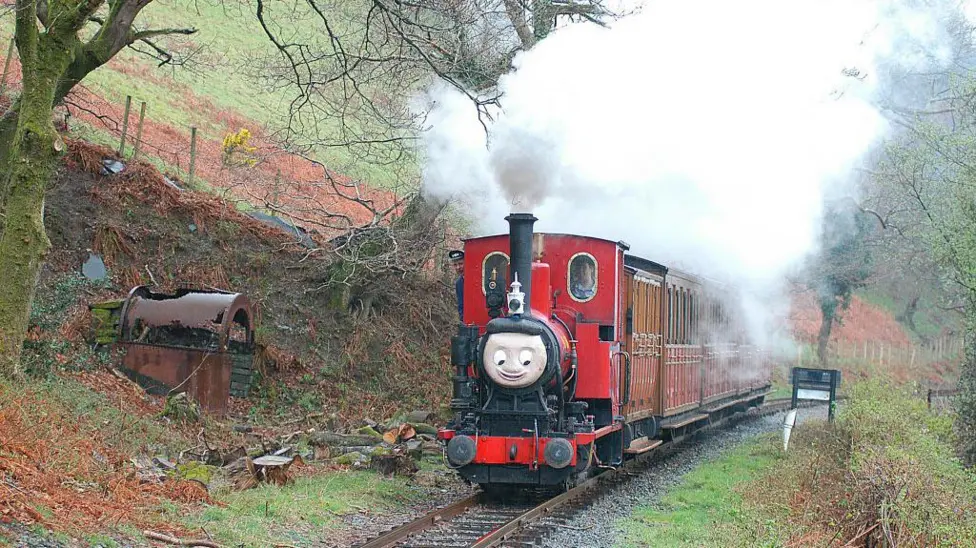
The Talyllyn Railway has been operated by volunteers since 1951 - Image © Getty Images
A Welsh railway where the creator of Thomas the Tank Engine volunteered as a guard is celebrating 75 years since becoming a world first.
In 1951, the Talyllyn Railway in Gwynedd became the first railway to be operated by volunteer enthusiasts. Among the first was the children's author Rev Wilbert Awdry, creator of Thomas the Tank Engine, who based some of his stories on his experiences while working there.
Railway historian and broadcaster Tim Dunn said the Talyllyn Railway had made its way into a number of Awdry's beloved books, adding that it was now the "spiritual home" of Thomas the Tank Engine.
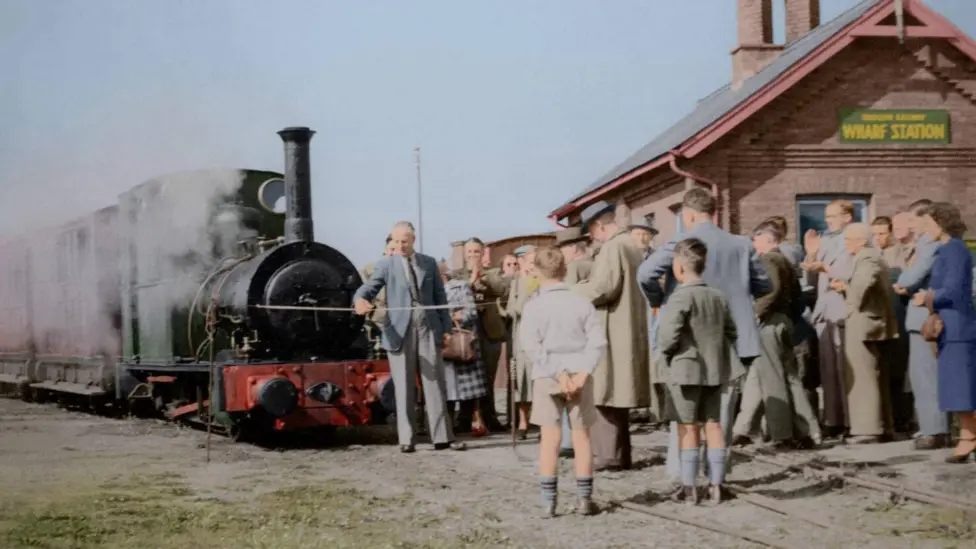
The Talyllyn Railway, seen here in 1951 with the late Duke of Edinburgh, becomes the first in the world to be operated by enthusiast volunteers - Image © Talyllyn Railway collection
When volunteers took over 75 years ago, the railway's owner had just died and it was about to close. The seven miles of track from Tywyn to Abergynolwyn was in a poor state and the one working steam locomotive was almost completely worn out, with no working brakes at times.
"For volunteers to take over and run a public railway was a completely new thing," said Ian Drummond from the Talyllyn Railway Preservation Society. "There had been volunteering before in other areas, but this was something bigger and something new. It attracted attention across the globe. We are the world's first preserved railway and the start of a movement which began here in Wales."
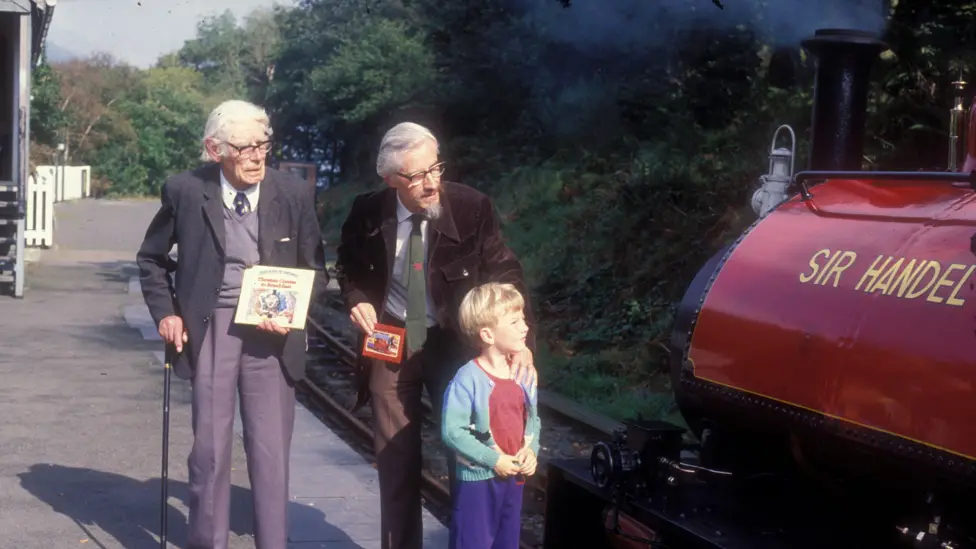
Rev Wilbert Awdry, creator of Thomas the Tank Engine (left) with his son and grandson at the Talyllyn Railway - Image © Talyllyn Railway collection
Under volunteer control, the railway carried a record number of passengers and made it through the 1951 season – though only just. On one occasion the steam locomotive ran out of water, leaving the crew sprinting to a nearby farm to borrow buckets and top it up from a stream.
The following year, a new volunteer arrived at Talyllyn - Rev Wilbert Awdry. Already famous for writing the Thomas the Tank Engine books, he offered to help as a guard on the train.
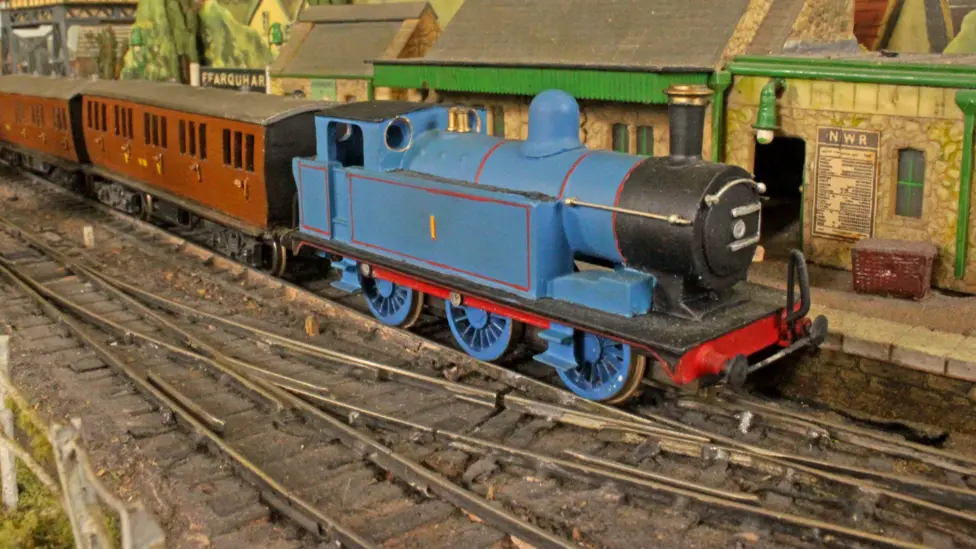
One of Rev Awdry's own model railways, including a miniature Thomas the Tank Engine, is now in the Talyllyn Railway's museum - Image © Talyllyn Railway collection
Stories from Awdry's time working on the railway found their way into his books, such as the time he managed to leave the refreshment lady behind at Abergynolwyn, the far end of the line.
Tim Dunn, railway historian and TV presenter who is also a volunteer at Talyllyn, said the railway had become the "spiritual home" of Thomas the Tank. "Awdry created new characters in the Thomas the Tank Engine books, based on the locomotives of the Talyllyn Railway. He wasn't just inspired by the locations, the locomotives and some of the things that had happened to him. The whole ethos of a friendly little railway made its way into his books, the sort of place with a quirk and a charm that children could warm to."
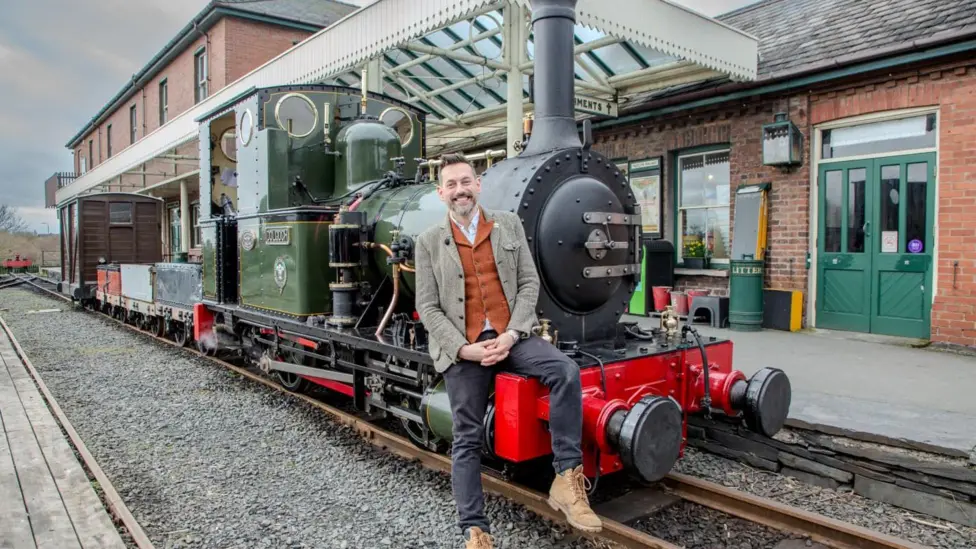
Railway historian and broadcaster Tim Dunn said the Talyllyn Railway is now the "spiritual home" of Thomas the Tank Engine - Image © Nathan Spence
Some doubted whether the Talyllyn Railway could succeed, but the volunteers saved the railway from closing and inspired others to do the same elsewhere in the UK, Europe, America and Australia.
The Talyllyn Railway now has around 450 active volunteers, including 18-year-old Isabel Richmond, who said that working on the railway in her spare time had inspired her to take up a career in engineering.
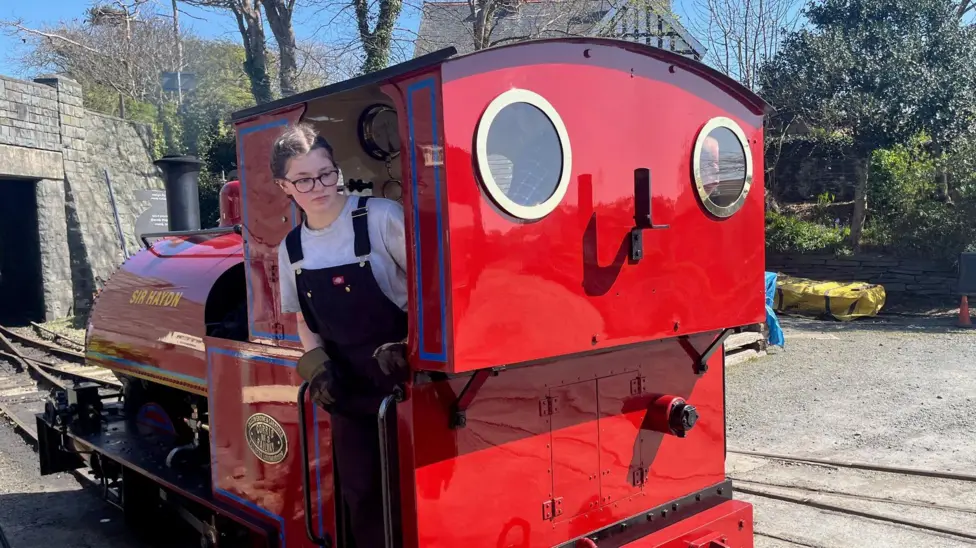
18-year-old Isabel Richmond started working at the railway as a hobby, but now plans to take up engineering as a career
"It's fun – when the weather is fine, it's nice to be outside and keeping busy," said Isabel. "There are loads of amazing people here, it's like a big family. I want to follow engineering as a career path, and there's loads of people here I can talk to and learn so much from – it's really valuable for me."
The Talyllyn Railway has been operated by volunteers since 1951 - Image © Getty Images
A Welsh railway where the creator of Thomas the Tank Engine volunteered as a guard is celebrating 75 years since becoming a world first.
In 1951, the Talyllyn Railway in Gwynedd became the first railway to be operated by volunteer enthusiasts. Among the first was the children's author Rev Wilbert Awdry, creator of Thomas the Tank Engine, who based some of his stories on his experiences while working there.
Railway historian and broadcaster Tim Dunn said the Talyllyn Railway had made its way into a number of Awdry's beloved books, adding that it was now the "spiritual home" of Thomas the Tank Engine.
The Talyllyn Railway, seen here in 1951 with the late Duke of Edinburgh, becomes the first in the world to be operated by enthusiast volunteers - Image © Talyllyn Railway collection
When volunteers took over 75 years ago, the railway's owner had just died and it was about to close. The seven miles of track from Tywyn to Abergynolwyn was in a poor state and the one working steam locomotive was almost completely worn out, with no working brakes at times.
"For volunteers to take over and run a public railway was a completely new thing," said Ian Drummond from the Talyllyn Railway Preservation Society. "There had been volunteering before in other areas, but this was something bigger and something new. It attracted attention across the globe. We are the world's first preserved railway and the start of a movement which began here in Wales."
Rev Wilbert Awdry, creator of Thomas the Tank Engine (left) with his son and grandson at the Talyllyn Railway - Image © Talyllyn Railway collection
Under volunteer control, the railway carried a record number of passengers and made it through the 1951 season – though only just. On one occasion the steam locomotive ran out of water, leaving the crew sprinting to a nearby farm to borrow buckets and top it up from a stream.
The following year, a new volunteer arrived at Talyllyn - Rev Wilbert Awdry. Already famous for writing the Thomas the Tank Engine books, he offered to help as a guard on the train.
One of Rev Awdry's own model railways, including a miniature Thomas the Tank Engine, is now in the Talyllyn Railway's museum - Image © Talyllyn Railway collection
Stories from Awdry's time working on the railway found their way into his books, such as the time he managed to leave the refreshment lady behind at Abergynolwyn, the far end of the line.
Tim Dunn, railway historian and TV presenter who is also a volunteer at Talyllyn, said the railway had become the "spiritual home" of Thomas the Tank. "Awdry created new characters in the Thomas the Tank Engine books, based on the locomotives of the Talyllyn Railway. He wasn't just inspired by the locations, the locomotives and some of the things that had happened to him. The whole ethos of a friendly little railway made its way into his books, the sort of place with a quirk and a charm that children could warm to."
Railway historian and broadcaster Tim Dunn said the Talyllyn Railway is now the "spiritual home" of Thomas the Tank Engine - Image © Nathan Spence
Some doubted whether the Talyllyn Railway could succeed, but the volunteers saved the railway from closing and inspired others to do the same elsewhere in the UK, Europe, America and Australia.
The Talyllyn Railway now has around 450 active volunteers, including 18-year-old Isabel Richmond, who said that working on the railway in her spare time had inspired her to take up a career in engineering.
18-year-old Isabel Richmond started working at the railway as a hobby, but now plans to take up engineering as a career
"It's fun – when the weather is fine, it's nice to be outside and keeping busy," said Isabel. "There are loads of amazing people here, it's like a big family. I want to follow engineering as a career path, and there's loads of people here I can talk to and learn so much from – it's really valuable for me."
| Re: Lake District joint bus-train ticket in car-free tourism plan In "Buses and other ways to travel" [374964/32004/5] Posted by ChrisB at 16:57, 9th May 2026 | |
It's only available in the train+bus direction.
| Re: Lake District joint bus-train ticket in car-free tourism plan In "Buses and other ways to travel" [374963/32004/5] Posted by Mark A at 16:53, 9th May 2026 | |
Does this offer increased resilience for people travelling on an advance through ticket - i.e. travel on a subsequent service should the bus miss a booked connection at Penrith?
Mark
| Re: So what do we expect of a nationalised GWR? In "Looking forward - the next 2, 5, 10 and 20 years" [374962/32002/40] Posted by ChrisB at 16:50, 9th May 2026 | |
First thing to state is that DfTO confirmed that there would be one GBR overall branding eventually - although the names may remain on those brandings. To commence once all TOCs are nationalised.
GWR Churchward not likely to happen until "the mid-2030s"
| Re: New Oxford - Bristol direct service, ongoing developments and discussion In "Oxford, Didcot and Reading from the West" [374961/28355/22] Posted by ChrisB at 16:42, 9th May 2026 | |
Rich Wilcox has tweeted/x'd -
The ORR has approved GWR's bid to run two-hourly Weekday and Saturday services from Bristol to Oxford.
However, Network Rail has to implement risk measures at 13 level crossings before any GWR services can start
This only for a trial period - to end 2027 & ORR is quite clear that a "strong presumption of continuation of rights does NOT apply"
However, Network Rail has to implement risk measures at 13 level crossings before any GWR services can start
This only for a trial period - to end 2027 & ORR is quite clear that a "strong presumption of continuation of rights does NOT apply"
Suspect that level crossing work will delay the service starting....
| Re: Swindon <-> Westbury service updates and amendments, ongoing discussion - 2026 In "TransWilts line" [374960/31359/18] Posted by grahame at 15:04, 9th May 2026 | |
14:19 Westbury to Swindon due 15:01
14:19 Westbury to Swindon due 15:01 is being delayed between Chippenham and Swindon and is now expected to be 16 minutes late.
This is due to trespassers on the railway.
14:19 Westbury to Swindon due 15:01 is being delayed between Chippenham and Swindon and is now expected to be 16 minutes late.
This is due to trespassers on the railway.
| Lake District joint bus-train ticket in car-free tourism plan In "Buses and other ways to travel" [374959/32004/5] Posted by Chris from Nailsea at 14:32, 9th May 2026 | |
From the BBC:
Hopes joint ticket will boost car-free tourism
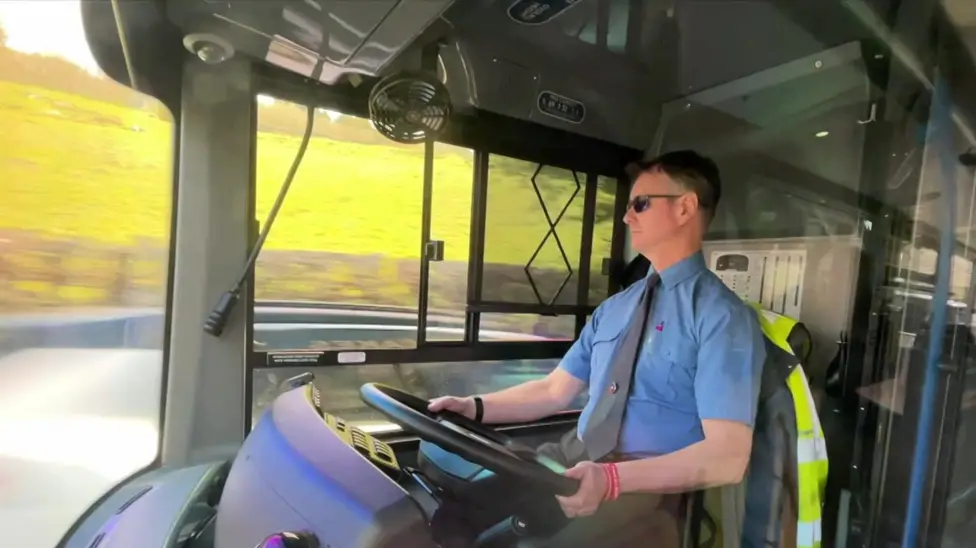
The joint bus and train ticket links Penrith with Keswick in the Lake District
It is hoped a joint train and bus ticket will boost the number of tourists visiting the Lake District without a car.
Those travelling to Penrith by train and then onwards to Keswick by bus will able to get a single, integrated ticket for the journey year-round as part of the Let's Go Car Free campaign. It follows a trial over the past two summers which saw a boost in passenger numbers, operators involved said.
However, frequent traveller Amy D'Agorne, 33, was sceptical and said it was no replacement for the actual train that ran to Keswick in the 1960s, adding: "It doesn't seem any different to what it has been previously. It's just an extra button."
Keswick was added as a destination in rail journey planners for both Avanti West Coast and TransPennine Express passengers.
As part of the rollout, Stagecoach doubled the frequency of its bus services connecting Keswick and Penrith to every half an hour.
Managing director Tom Waterhouse said the ticket, officially launched last week, helped create "easy, seamless travel".
President of Cumbria Tourism Jim Walker claimed it would make "low-carbon journeys even easier, more accessible and appealing for both visitors and local residents".
D'Agorne frequently travels between York and Keswick and has used public transport for the past few months while her car is repaired. "I don't know if this is a bit of a cop-out or an excuse for not having an actual train station in Keswick, which is kind of crazy because it's such a big tourist destination," she said.
She does not believe the ticketing will encourage her to stay using public transport because it was "still such a nightmare" to do the route. It takes just over two hours to drive, but about four hours on public transport, not including delays.
But in 2025, the second year the integrated ticket was in place, Avanti West Coast said it saw a 48% increase in travellers to and from Penrith over the summer months compared to 2019, prior to Covid.
TransPennine Express said it saw a 58% jump over the same period.
Stagecoach said it recorded "similarly strong growth after the trial" with nearly 442,000 trips over the summer season (April - November), which was 14% more than in 2023.
The joint bus and train ticket links Penrith with Keswick in the Lake District
It is hoped a joint train and bus ticket will boost the number of tourists visiting the Lake District without a car.
Those travelling to Penrith by train and then onwards to Keswick by bus will able to get a single, integrated ticket for the journey year-round as part of the Let's Go Car Free campaign. It follows a trial over the past two summers which saw a boost in passenger numbers, operators involved said.
However, frequent traveller Amy D'Agorne, 33, was sceptical and said it was no replacement for the actual train that ran to Keswick in the 1960s, adding: "It doesn't seem any different to what it has been previously. It's just an extra button."
Keswick was added as a destination in rail journey planners for both Avanti West Coast and TransPennine Express passengers.
As part of the rollout, Stagecoach doubled the frequency of its bus services connecting Keswick and Penrith to every half an hour.
Managing director Tom Waterhouse said the ticket, officially launched last week, helped create "easy, seamless travel".
President of Cumbria Tourism Jim Walker claimed it would make "low-carbon journeys even easier, more accessible and appealing for both visitors and local residents".
D'Agorne frequently travels between York and Keswick and has used public transport for the past few months while her car is repaired. "I don't know if this is a bit of a cop-out or an excuse for not having an actual train station in Keswick, which is kind of crazy because it's such a big tourist destination," she said.
She does not believe the ticketing will encourage her to stay using public transport because it was "still such a nightmare" to do the route. It takes just over two hours to drive, but about four hours on public transport, not including delays.
But in 2025, the second year the integrated ticket was in place, Avanti West Coast said it saw a 48% increase in travellers to and from Penrith over the summer months compared to 2019, prior to Covid.
TransPennine Express said it saw a 58% jump over the same period.
Stagecoach said it recorded "similarly strong growth after the trial" with nearly 442,000 trips over the summer season (April - November), which was 14% more than in 2023.
| Points failure at Thetford blocks lines and disrupts services - 9 May 2026 In "The Wider Picture in the United Kingdom" [374958/32003/51] Posted by Chris from Nailsea at 14:02, 9th May 2026 | |
From the BBC:
Railway lines blocked after points failure
Railway services have been disrupted after a points failure, resulting in bus replacement services, delays and cancellations.
Greater Anglia said the fault at Thetford in Norfolk, external was blocking the line to Wymondham, and Network Rail workers were due on site.
Trains are running between Norwich and Wymondham, with passengers for Thetford then taking a replacement bus journey of about 40 minutes.
A replacement bus service between Thetford and Cambridge North, via Brandon and Ely, is also in place due to planned engineering work.
Railway services have been disrupted after a points failure, resulting in bus replacement services, delays and cancellations.
Greater Anglia said the fault at Thetford in Norfolk, external was blocking the line to Wymondham, and Network Rail workers were due on site.
Trains are running between Norwich and Wymondham, with passengers for Thetford then taking a replacement bus journey of about 40 minutes.
A replacement bus service between Thetford and Cambridge North, via Brandon and Ely, is also in place due to planned engineering work.
| Re: Network Rail issues warning over Featherstone level crossing In "The Wider Picture in the United Kingdom" [374957/31894/51] Posted by Chris from Nailsea at 13:45, 9th May 2026 | |
An update, from the BBC:
Featherstone crossing could be shut for six months after misuse
A level crossing where children were spotted "playing chicken" with oncoming trains could remain closed for six months, Network Rail has said.
The operator imposed an emergency 21-day closure of the Sportsfield crossing in Featherstone on 23 April after "a sustained period of serious safety concerns". At the time, it said there had been four instances of "dangerous misuse" in just two weeks, which included a report of a child being allowed to wander onto the railway.
Network Rail has now applied for an extended, six-month closure to allow time to develop plans for enhanced safety measures, including stop lights and CCTV cameras. Since last month's closure, it said temporary mesh fencing had been replaced with continuous palisade fencing to prevent access.
It said staff and British Transport Police (BTP) officers had also stepped up patrols to deter trespassers and prevent misuse elsewhere on the line. The operator has also visited schools across the area to give safety advice to 2,730 pupils.
Level crossing manager Darren Robertson-Wilson said: "Network Rail understands the inconvenience the current closure of Sportsfield level crossing may cause for some people, but safety must remain the highest priority. We've seen repeated, reckless behaviour here and the actions we've taken are about preventing someone from being seriously injured or killed. Our position remains that increased safety measures are needed before Sportsfield level crossing can be reopened safely. While the crossing has been closed, we've continued to work closely with the community, Wakefield Council and BTP to that end."
A level crossing where children were spotted "playing chicken" with oncoming trains could remain closed for six months, Network Rail has said.
The operator imposed an emergency 21-day closure of the Sportsfield crossing in Featherstone on 23 April after "a sustained period of serious safety concerns". At the time, it said there had been four instances of "dangerous misuse" in just two weeks, which included a report of a child being allowed to wander onto the railway.
Network Rail has now applied for an extended, six-month closure to allow time to develop plans for enhanced safety measures, including stop lights and CCTV cameras. Since last month's closure, it said temporary mesh fencing had been replaced with continuous palisade fencing to prevent access.
It said staff and British Transport Police (BTP) officers had also stepped up patrols to deter trespassers and prevent misuse elsewhere on the line. The operator has also visited schools across the area to give safety advice to 2,730 pupils.
Level crossing manager Darren Robertson-Wilson said: "Network Rail understands the inconvenience the current closure of Sportsfield level crossing may cause for some people, but safety must remain the highest priority. We've seen repeated, reckless behaviour here and the actions we've taken are about preventing someone from being seriously injured or killed. Our position remains that increased safety measures are needed before Sportsfield level crossing can be reopened safely. While the crossing has been closed, we've continued to work closely with the community, Wakefield Council and BTP to that end."
| Re: Advance fares - hardly the most robust offering In "Fare's Fair" [374956/31978/4] Posted by ChrisB at 11:46, 9th May 2026 | |
It is mad - and needs sorting under GBR....
| Re: 13th December 2026 - Great Western returns to public ownership In "Across the West" [374955/31999/26] Posted by ChrisB at 11:41, 9th May 2026 | |
(Asking more in hope than expectation) - can anyone tell me how this, and GBR in general, will result in a better experience for customers?
Very little. The DfT want rail subsidies cut even further for starters.
Indeed they do.
Confirmation yesterday too that all stock running under GBR Rail will eventually carry the same GBR design....So the GWR green will disappear.
| Re: 13th December 2026 - Great Western returns to public ownership In "Across the West" [374954/31999/26] Posted by ellendune at 11:00, 9th May 2026 | |
(Asking more in hope than expectation) - can anyone tell me how this, and GBR in general, will result in a better experience for customers?
If you read the articles in the railway press on the first integrated management structures set up in this current change, particularly the article on the Greater Anglia one in the May edition of Modern Railways, I think you will see the sort of savings that the management believe can be made through integration.
| Re: So what do we expect of a nationalised GWR? In "Looking forward - the next 2, 5, 10 and 20 years" [374953/32002/40] Posted by Mark A at 11:00, 9th May 2026 | |
Also available on Bluesky (unless someone has an account, X is pretty much a closed book, Bluesky's essentially a public web site.)
Mark
https://bsky.app/profile/noeldolphin.bsky.social/post/3mle5putw6c2j
| Re: Advance fares - hardly the most robust offering In "Fare's Fair" [374952/31978/4] Posted by IndustryInsider at 10:49, 9th May 2026 | |
Yes, split ticketing is a whole different discussion altogether. And you won’t find me arguing with anyone who thinks it’s mad!
| Re: On tour, May 2026, Grahame In "The Lighter Side" [374951/31997/30] Posted by stuving at 10:43, 9th May 2026 | |
Well, now we know from the crib sheet that this is Flushing. At first sight on the satellite views it looks wrong though - those glazed hoops are hard to match between the two pictures.
The area next door looks odd too: very much like an abandoned major vehicle ferry terminal with its queueing area and control tower. But there's only a bike and people ferry there ... for the obvious reason; there is now a tunnel. I wonder how important that is psychologically to the inhabitants of Dutch Flanders, who are otherwise marooned on a narrows trip of land surrounded by Belgians!
| Re: 13th December 2026 - Great Western returns to public ownership In "Across the West" [374950/31999/26] Posted by plymothian at 09:46, 9th May 2026 | |
(Asking more in hope than expectation) - can anyone tell me how this, and GBR in general, will result in a better experience for customers?
Very little. The DfT want rail subsidies cut even further for starters.
