







Recent Public Posts - [guest]
| Re: Spring 1965 - timetables Salisbury - Bath / Chippenham / Patney & Chirton In "TransWilts line - Swindon, Chippenham, Melksham, Trowbridge, Westbury, Salisbury" [378810/32418/18] Posted by Mark A at 11:58, 28th August 2026 |      |
Graham's 1965 timetable and people's reflections on the issues with it made me think: do we see the same practices in the current era, and to what extent?
That does prompt the question 'Current era?' - one measure would be 'Post 1997 and the arrival of the privatised railway' - an era that has seen strong growth for rail travel - a growth that in some cases wasn't anticipated in the way individual franchises were structured.
An alternative current era would be 'The Covid pandemic and after'.
Against a background of growth, what's not been seen is a wholesale shredding of infrastructure (Those photos of Devizes, 1965 and several other examples, not least the Great Central main line) - and the later smattering of irksome reductions such as Westbury's missing platform, or the Bradford junction north curve - these were pre-privatisation changes at a time when managed decline was still an anticipation.
Not so the Maindee curve, by Newport. Along with the buoyant services it carried, it was a victim of the new structure of the privatised railway, its singling will no doubt be quoted as a reason the railway cannot possibly reinstate the much-used services onto the Marches line from the west country and from Wiltshire.
https://www.branchline.uk/rail_chronology/Maindee-letter.pdf
Managing excess passenger flows using the timetable - in the west, with capacity on the network constrained by the shortfall in trains the railway's not at all averse to that and it's Weymouth that's the shining star in that dark firmament. The timetable's been habitually squatting on the potential for growth in passenger numbers to Weymouth - especially so since the loco-hauled stuff ended.
What could really improve things for summer trips to Weymouth would be to jiggle a few trains around on other days so that they actually connect at Westbury - something workable down in the morning and back late(r) afternoon.
The underlying question must be 'How should the railway handle seasonal flows - and in a graceful manner?' The answer shouldn't be 'In July, deploy the winter minimum viable product' as business doesn't grow, and existing passengers suffer (hi, Cambrian Coast Line). Neither can it be a large strategic reserve of things on wheels that for most of the year do not turn them. Timetabling a summer-only higher capacity train but then very frequently turning it short of its branch line destination isn't exactly brilliant either (waves to Newquay).
I don't know the answer but in the West it would be good if the railway was in a position to step up and provide more for the journeys that, in a car, are awkward. Even on the major axes I'm rather missing the time when the GWR's marketing stated, albeit with a hyperbolic ambition 'With our new timetable we intend to empty the M4'.
| Re: Derailment, Wickford,14th August 2026 In "The Wider Picture in the United Kingdom" [378809/32365/51] Posted by stuving at 11:36, 28th August 2026 | |
RAIB have announced an enquiry into this incident.
Derailment of a passenger train at Wickford
Investigation into the derailment of a passenger train at Wickford, Essex, 14 August 2026.
Rail Accident Investigation Branch Published: 28 August 2026
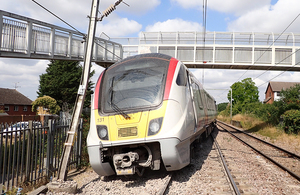
At around 14:08 on 14 August 2026, a passenger train derailed around 2.1 miles (3.4 kilometres) south-east of Wickford station, while travelling between Southend Victoria and London Liverpool Street.
The train, operated by Greater Anglia, was formed of two class 720 electric multiple units coupled together, each consisting of five vehicles. The rearmost vehicle derailed and its wheels subsequently ran on the sleepers and ballast for around 1.5 miles (2.4 kilometres). The train remained upright throughout and there were no reported injuries to the 62 people estimated to be on board.
Preliminary analysis of the on-train data recorder (sometimes referred to as ‘the black box’) obtained from the front vehicle recorded that the train was travelling at around 77 mph (124 km/h) when it derailed. The driver reported seeing a kink in the track which rocked the driving cab as the train passed over it. Forward-facing CCTV recovered from the train involved shows a misalignment in the track at the same location as the driver’s report and the point of derailment.
The train driver was in the process of reporting the track condition to the signaller when they received an emergency call from another train passing in the opposite direction and applied the train’s brakes.
The train involved in the accident sustained damage and the train passing in the opposite direction received minor damage from flying ballast. There was significant damage caused to the track, signalling and overhead electrification equipment.
Our investigation will examine the sequence of events leading up to and during the derailment. It will also consider:
the actions of those involved and the factors that may have influenced them
the status of the track at this location and how it was maintained
the effectiveness of any mitigation measures to address the risk of operating trains in hot weather
the performance of the train during the derailment
any underlying management factors.
Our investigation is independent of any investigation by the railway industry or by the industry’s regulator, the Office of Rail and Road.
We will publish our findings, including any recommendations to improve safety, at the conclusion of our investigation. This report will be available on our website.
You can subscribe to automated emails notifying you when we publish our reports.
Investigation into the derailment of a passenger train at Wickford, Essex, 14 August 2026.
Rail Accident Investigation Branch Published: 28 August 2026
At around 14:08 on 14 August 2026, a passenger train derailed around 2.1 miles (3.4 kilometres) south-east of Wickford station, while travelling between Southend Victoria and London Liverpool Street.
The train, operated by Greater Anglia, was formed of two class 720 electric multiple units coupled together, each consisting of five vehicles. The rearmost vehicle derailed and its wheels subsequently ran on the sleepers and ballast for around 1.5 miles (2.4 kilometres). The train remained upright throughout and there were no reported injuries to the 62 people estimated to be on board.
Preliminary analysis of the on-train data recorder (sometimes referred to as ‘the black box’) obtained from the front vehicle recorded that the train was travelling at around 77 mph (124 km/h) when it derailed. The driver reported seeing a kink in the track which rocked the driving cab as the train passed over it. Forward-facing CCTV recovered from the train involved shows a misalignment in the track at the same location as the driver’s report and the point of derailment.
The train driver was in the process of reporting the track condition to the signaller when they received an emergency call from another train passing in the opposite direction and applied the train’s brakes.
The train involved in the accident sustained damage and the train passing in the opposite direction received minor damage from flying ballast. There was significant damage caused to the track, signalling and overhead electrification equipment.
Our investigation will examine the sequence of events leading up to and during the derailment. It will also consider:
the actions of those involved and the factors that may have influenced them
the status of the track at this location and how it was maintained
the effectiveness of any mitigation measures to address the risk of operating trains in hot weather
the performance of the train during the derailment
any underlying management factors.
Our investigation is independent of any investigation by the railway industry or by the industry’s regulator, the Office of Rail and Road.
We will publish our findings, including any recommendations to improve safety, at the conclusion of our investigation. This report will be available on our website.
You can subscribe to automated emails notifying you when we publish our reports.
| Re: 2 car trains (again) In "Portsmouth to Cardiff" [378808/32239/20] Posted by IndustryInsider at 11:26, 28th August 2026 Already liked by Chris from Nailsea | |
I haven’t heard anything about 158s personally.
Here’s more on the Class 175 plan - which explains why less have been in service lately:
“A recovery plan is being put in place which will centre around a dedicated technical investigation team, with specialists from GWR and our industry partners Alstom and Angel.
New processes will also be introduced with enhanced pre-service checks and ensuring the trains complete a significant amount of miles without a fault occurring before they are able to go into passenger service.”
But the facts are that the 175s were fairly fragile with TfW and are from the same family as the 180s which were fairly fragile when with FGW. Having been in storage for a year or two won’t have helped.
So I think just about reliable enough is the best we can wish for!
| Re: 2 car trains (again) In "Portsmouth to Cardiff" [378807/32239/20] Posted by John D at 11:09, 28th August 2026 | |
There’s a comprehensive plan to sort out the 175 problem. As with the 180s with lots of love and care they can just about be reliable enough, so I would expect that to bear fruit at some point.
Thank you for the info.
Although the phrase just about be reliable enough, doesn't fill me with confidence.
Would you happen to know if there is any truth in the stories that some of the Welsh 158s will be joining the GWR fleet, due to uncertain timescale with 175s
| Re: 29th August and 5th September 2026 - day trips Melksham to Weymouth In "Diary - what's happening when?" [378806/32419/34] Posted by grahame at 10:47, 28th August 2026 | |
Sharing from https://www.facebook.com/MelkshamTUG ... I'll be headed. for Weymouth this Saturday on the penultimate direct day trip train of the year - final run on 5th September, bustituted from Melksham on 12th.
Tomorrow's weather forecast for Weymouth suggest rain before we get there, and perhaps some mid afternoon too. Which - may - put some people off. A couple of social media posts have got rather stronger traction than I might have anticipated and hopefully it will be busy but not crammed.
When we first did "Weymouth" trips, we had a couple of carriages to Westbury and then more were tacked on. The return train was up to 6 carriages, and one year it was even an HST both ways. Marketing this summer has been subdued - but then on the earlier trip I did it was full and standing in the 3 cars which is all we have now from Yeovil, so we're about right as demand could be generated so easily that would outstrip supply.
What could really improve things for summer trips to Weymouth would be to jiggle a few trains around on other days so that they actually connect at Westbury - something workable down in the morning and back late(r) afternoon.
| Re: Passport required from next month for UK to Ireland travel. In "The Wider Picture in the United Kingdom" [378805/32422/51] Posted by grahame at 10:32, 28th August 2026 | |
Further information - Stena also applying the new "rule" too.
From TimeOut
Taking a boat from the UK to Ireland this autumn? Double-check that your passport is in date because it’ll soon be the only ID that’ll allow you to make the journey.
At the moment, multiple forms of photo ID (like bus passes, work ID cards and international student cards) are accepted on the ferry journey between Britain and Ireland. But from late September onwards, passengers will need a valid passport, regardless of age or nationality.
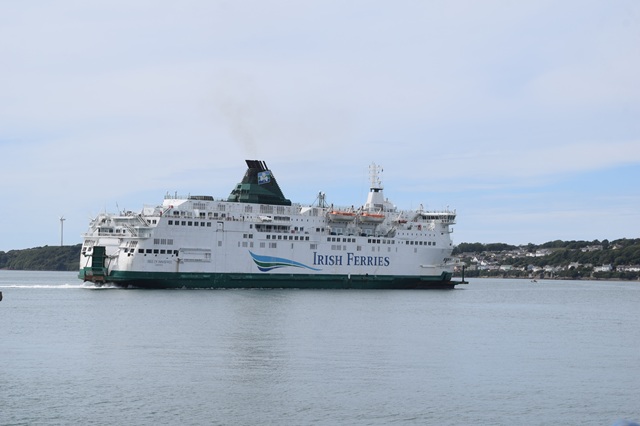
Stena Line and Irish Ferries confirmed that passengers on the Holyhead to Dublin and Fishguard to Rosslare services must soon show a passport on departure – no other form of ID will be allowed. The change comes from UK Border Force rules concerning the ‘accuracy and integrity of passenger data before boarding’ and will take effect from Monday September 28.
However, if you’re using Stena Line for services via Belfast, Liverpool, Cairnryan or Heysham, then any form of photo ID is still fine. There are also still no passport checks between Northern Ireland and the Republic of Ireland.
Despite the new rule, the UK, Ireland, the Isle of Man and the Channel Islands are all still part of the Common Travel Area, which means that citizens aren’t legally required to show a passport to travel freely between each place. However, Aer Lingus (as of February this year) and Ryanair both demand that passengers going between Ireland and Great Britain must present a passport at departure, not any other photo identification. The lesson? It’s just best to pack your passport for any journey over to the Emerald Isle.
At the moment, multiple forms of photo ID (like bus passes, work ID cards and international student cards) are accepted on the ferry journey between Britain and Ireland. But from late September onwards, passengers will need a valid passport, regardless of age or nationality.
Stena Line and Irish Ferries confirmed that passengers on the Holyhead to Dublin and Fishguard to Rosslare services must soon show a passport on departure – no other form of ID will be allowed. The change comes from UK Border Force rules concerning the ‘accuracy and integrity of passenger data before boarding’ and will take effect from Monday September 28.
However, if you’re using Stena Line for services via Belfast, Liverpool, Cairnryan or Heysham, then any form of photo ID is still fine. There are also still no passport checks between Northern Ireland and the Republic of Ireland.
Despite the new rule, the UK, Ireland, the Isle of Man and the Channel Islands are all still part of the Common Travel Area, which means that citizens aren’t legally required to show a passport to travel freely between each place. However, Aer Lingus (as of February this year) and Ryanair both demand that passengers going between Ireland and Great Britain must present a passport at departure, not any other photo identification. The lesson? It’s just best to pack your passport for any journey over to the Emerald Isle.
Yet from https://www.gov.uk/government/publications/common-travel-area/common-travel-area-accessible?
British and Irish citizens travelling to GB via Ireland are not required to present a passport as evidence of identity and nationality. British and Irish citizens may present any other document(s) that satisfactorily establishes their nationality and identity
| Re: 2 car trains (again) In "Portsmouth to Cardiff" [378804/32239/20] Posted by IndustryInsider at 10:24, 28th August 2026 Already liked by Mark A | |
There’s a comprehensive plan to sort out the 175 problem. As with the 180s with lots of love and care they can just about be reliable enough, so I would expect that to bear fruit at some point.
| Re: Passport required from next month for UK to Ireland travel. In "The Wider Picture in the United Kingdom" [378803/32422/51] Posted by bobm at 10:24, 28th August 2026 | |
By coincidence, I was in Pembroke Dock at the start of the month and happened to see the ferry leave for Rosslare. On researching it further I discovered I could travel with only photo ID and it put me in mind to perhaps make a trip next summer.
If a passport is now required that might need a rethink. I am not sure I can justify the expense for what will probably be its only use.
| Re: North Cotswold line delays and cancellations - 2026 In "London to the Cotswolds" [378801/31371/14] Posted by charles_uk at 09:44, 28th August 2026 | |
09:52 London Paddington to Hereford due 12:48 will be cancelled.
This is due to a safety inspection on a train.
13:18 Hereford to London Paddington due 16:25 will be cancelled.
This is due to a safety inspection on a train.
This is due to a safety inspection on a train.
13:18 Hereford to London Paddington due 16:25 will be cancelled.
This is due to a safety inspection on a train.
| When the Train Came to Okehampton: Railway History 1871 In "Railway History and related topics" [378800/32424/55] Posted by grahame at 09:04, 28th August 2026 | |
from the Museum of Dartmoor Life
In 1860 the London South Western Railway opened its main line from Waterloo to Exeter Queen Street station. This led to proposals for a standard gauge North Devon and Okehampton railway. A Railway Act was passed on 17th of July 1862 for a line of fourteen miles long at a cost of £130,000. The first sod was finally cut on 31st March 1864 by Countess Portsmouth and the company was renamed the Devon and Cornwall Railway. The route required the construction of 9 over-bridges, 12 under-bridges and 1 viaduct at Fatherford.
Difficult terrain, failing money markets and striking navvies all meant it took four and a half years to complete the last four and a half miles of track to Okehampton. This resulted in the formal civic celebrations occurring five weeks before the passenger trains first ran
On Tuesday 29th August 1871 a special train travelled from Waterloo carrying railway directors and the Earl of Portsmouth. They arrived at Okehampton station at 3pm where large crowds had gathered, and three bands were playing. Mayor of the town John Downall gave a formal civic welcome, then it was off for a luncheon provided by Mr Ball, landlord of the White Hart Hotel. Escorted by the Band of the Volunteer Artillery they walked to a marquee, erected halfway between the station and town. A good meal was had by all as the speeches of thanks proclaimed and the mayor thanked the engineer Mr Galbraith and contractor Mr Relf for completing the line. That evening a celebration ball was held at the White Hart Hotel.
Difficult terrain, failing money markets and striking navvies all meant it took four and a half years to complete the last four and a half miles of track to Okehampton. This resulted in the formal civic celebrations occurring five weeks before the passenger trains first ran
On Tuesday 29th August 1871 a special train travelled from Waterloo carrying railway directors and the Earl of Portsmouth. They arrived at Okehampton station at 3pm where large crowds had gathered, and three bands were playing. Mayor of the town John Downall gave a formal civic welcome, then it was off for a luncheon provided by Mr Ball, landlord of the White Hart Hotel. Escorted by the Band of the Volunteer Artillery they walked to a marquee, erected halfway between the station and town. A good meal was had by all as the speeches of thanks proclaimed and the mayor thanked the engineer Mr Galbraith and contractor Mr Relf for completing the line. That evening a celebration ball was held at the White Hart Hotel.
| Re: Weymouth line cancellations In "Heart of Wessex" [378799/32074/19] Posted by grahame at 08:45, 28th August 2026 | |
There is parking at Thornford, the council has put a layby a few hundred yards away on the road from the village towards Yeovil. You have to walk from the station, turn left at the junction into the road leading to the station. See attached screenshot, apologies about the quality but the original was 6.1Mb and thus was resized
I've visited the station by road and missed that layby. I walked in from Yeovil Junction from the north ... walked out towards Yetminster headed south. The lay-by is on what was to me a sideroad to the east, heading into the village. Thanks for the picture / detail.
| Re: 2 car trains (again) In "Portsmouth to Cardiff" [378798/32239/20] Posted by John D at 08:22, 28th August 2026 Already liked by Mark A | |
There is local talk that the restoration of 4 or 5 coach trains on Cardiff-Portsmouth promised 2 years ago from this Decembers timetable after all the 175s are in service in Devon and Cornwall is not happening.
Clearly the 175s still do not work, and they can barely get one in service for a whole day, so idea that lots of 158s and 16x turbos can be displaced to Bristol area by end of 2026 is now looking like fiction.
Not sure what the plans are now (apart from keep hoping 175s can be made to work), more and more trains in the West Wiltshire, BANES, WECA area are busy, standing at times. And the ORR passenger numbers confirm this.
Anyone know if there is a plan B, or are regular shortages of stock the indefinite plan until further notice.
| Re: Weymouth line cancellations In "Heart of Wessex" [378797/32074/19] Posted by bradshaw at 07:49, 28th August 2026 | |
There is parking at Thornford, the council has put a layby a few hundred yards away on the road from the village towards Yeovil. You have to walk from the station, turn left at the junction into the road leading to the station. See attached screenshot, apologies about the quality but the original was 6.1Mb and thus was resized
| Re: Station fire at Paignton, particularly the footbridge - 21 July 2026 In "Shorter journeys in Devon - Central, North and South" [378796/32262/24] Posted by REVUpminster at 07:12, 28th August 2026 | |
The main building looks untouched. I'll concede there could be smoke damage. No photographs of the interior have been shown. The signaller is still in there as is the staff accommodation but now has a new exit. The plastic bin bags tell a story. The fire brigade, and it's not a criticism, do a lot of damage when getting at the seat of a fire.
The building opposite is now taking 11 weeks to demolish instead of six.
 Painton Station fire 23 July 2026 6 by Robert, on Flickr
| Re: Seaton tramway In "Heritage railways, Railtours, buses, canals, steamships and other public transport based attractions" [378795/25439/47] Posted by grahame at 07:10, 28th August 2026 Already liked by bradshaw, Oxonhutch | |
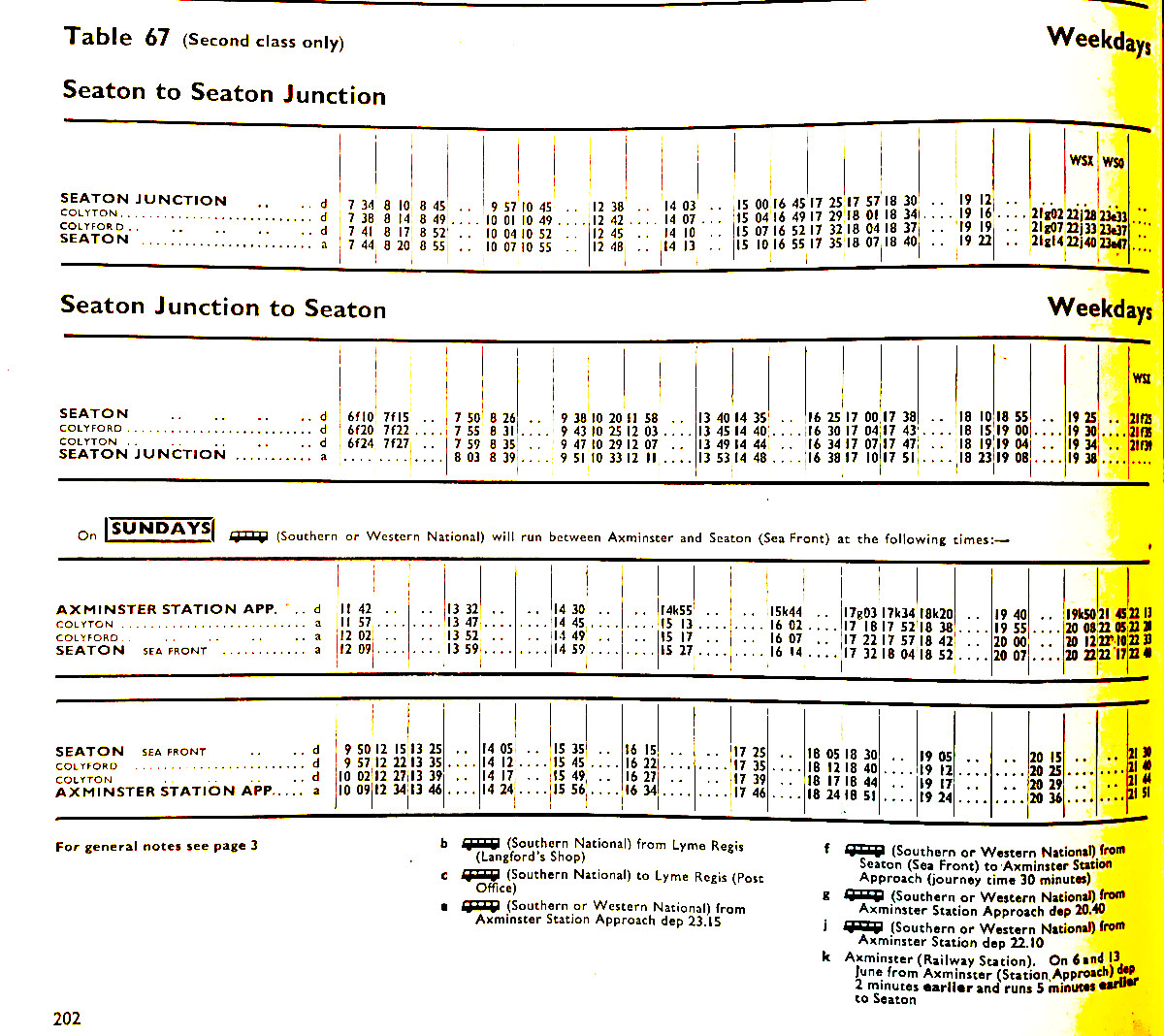
The Seaton Tramway has been operating 56 years now - opened 28th August 1970. How time flies!
Here is the timetable from January to June 1965 when it was still a standard gauge railway all the way to a junction with the West of England main line at Seaton Junction, entrusted to the care of the Western Region of British Railways
| Re: West Wiltshire Rail User Group - Geographic area of primary interest In "Campaigns for new and improved services" [378794/32421/28] Posted by grahame at 04:32, 28th August 2026 Already liked by Chris from Nailsea | |
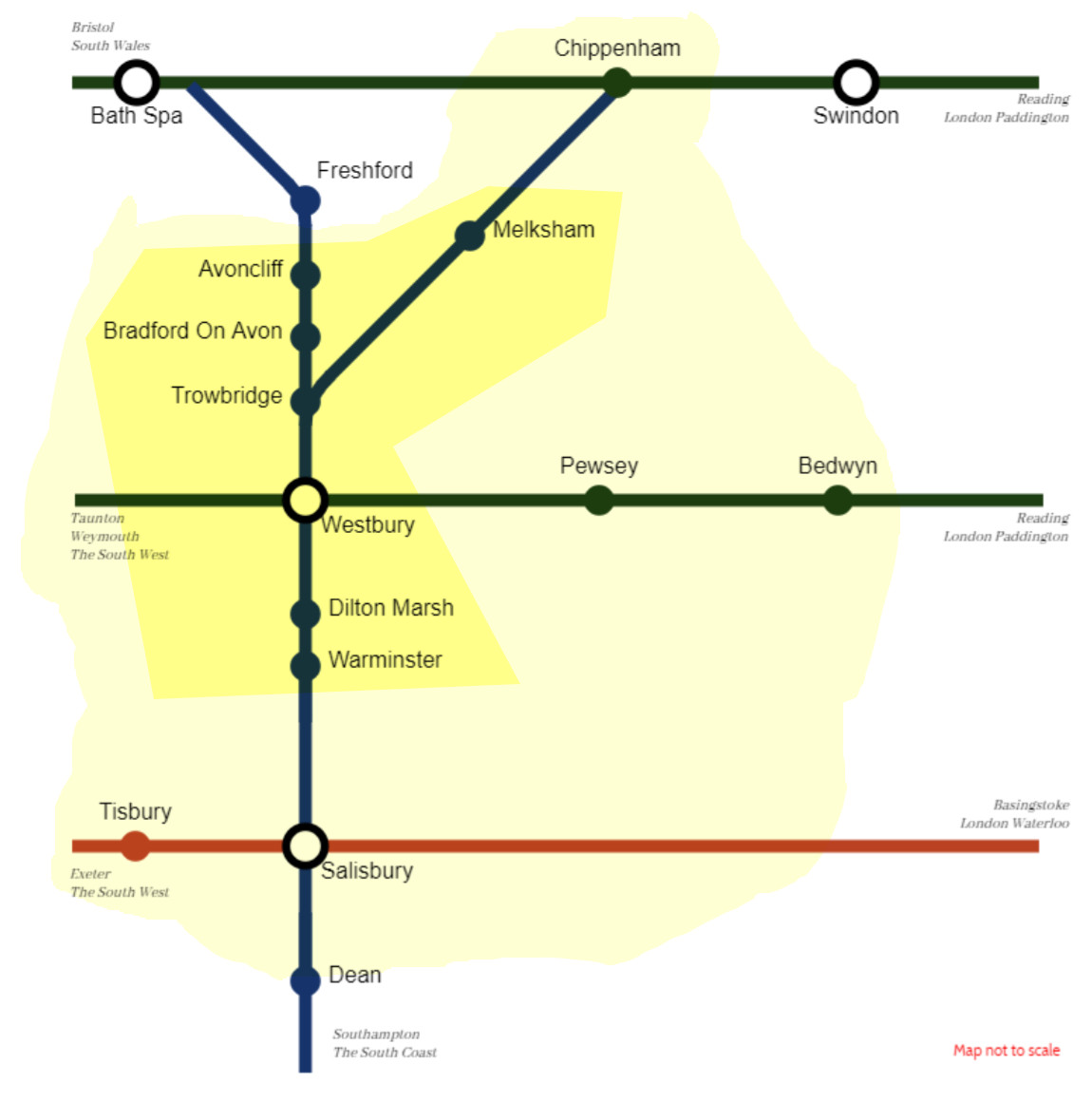
Here's a map based from Wiltshire Rail onto which I have painted the unitary area of Wiltshire (our local transport authority) and then with a deeper yellow the West Wiltshire area.
| Re: West Wiltshire Rail User Group - Geographic area of primary interest In "Campaigns for new and improved services" [378792/32421/28] Posted by grahame at 03:46, 28th August 2026 | |
I suspect user groups will slowly align to the new Transport Authority holders boundaries eventually - as that is where we will need to campaign to - Unitary Mayoral Authorities generally, eventually
Also, where will Community Rail Partnerships align themselves?
Severnside CRP, just for example, will have issues in linking directly to any one specific Transport Authority.
CfN.
There is logic in CRPs aligning themselves with transport authorities, yes, but I'm not sure that they are USER groups these days. Rather I might characterise them as dominated other than by rail users local to the line / area covered, and funded by the rail industry / Department for Transport to whom they thus have a loyalty, and with an impressive set of policies required with - I'm sure - good intent, but which pull them away from independent representation of the user and mute their inputs for passengers. That's not to say they don't do a great deal of good - just something different.
We have two CRPs in West Wiltshire - Severnside (Avoncliff and Bradford-on-Avon outside WECA), TransWilts (Swindon outside Wiltshire LTA). The South Wessex CRP covers "that part of the Heart of Wessex Line which runs from Frome to Weymouth" so Somerset and and Dorset so excludes Westbury, even though their trains all run to / from there. All very messy and the sort of problem you get as you try and overlay geological, political, economic and operational area geographies which in any case overlap on each other.
| Re: Passport required from next month for UK to Ireland travel. In "The Wider Picture in the United Kingdom" [378791/32422/51] Posted by grahame at 03:26, 28th August 2026 | |
As a private company, they can choose what ID they require of travellers and it's probably better business to look after the 95% who have passports and are so easy and uniform to process that spend time and money and employ more people to process the 5% "awkward squad'. There is no requirement that I know on them to act as a common carrier.
Is it being "awkward" to not have need for a passport's primary purpose and also not want the cost of acquiring one?
The only reason I recently acquired one again (foreign born - full cost and process) was because it was needed by another government department, unrelated to foreign travel.
I was writing tongue in cheek. Suggesting that Irish Ferries might be doing it because those without passports are more complex and admin-costly for them to handle rather than being awkward. To give a hint at that, I put the words "awkward squad" in quotes.
The passport within the UK / Ireland "open" (quotes again) travel zone is in effect an ID document, and there's a discussion there that carries a who can of worms with it. Some European countries - it might even be most - require you to carry ID with you at all times and if not a national of that country, that probably means a passport. There are reports on various groups I'm on of police and other officials getting pretty shirty with people not carrying passports but rather leaving them safe in their hotels.
The UK -> Ireland border is an interesting case in being open transit / ID but not passport necessarily may be required as I understand it. Between Schengen countries as a none-schengen national, there are still occasional border checks and for me that needs a passport.
Corollary. Yesterday I spent over an hour that I won't get back on the phone to OVO Energy who had just sent me an email, seemingly chasing up payment of an electric and gas bill that had been sent less than a week previous, "You haven’t paid your energy bill in full this month, so we wanted to check in and see if we can help." they wrote. The whole process from my end was time wasting and irritating, with automated systems pushing, pushing, pushing me to use their website help, my online account, web chat rather than actually speaking with an agent. And I was - I suspect - in the minority who are difficult to handle because I was NOT interacting online - i.e. one of the "awkward squad".
Systems ARE needed to be able to handle the perfectly legal but minority cases and not to sweep in those who choose or cannot do things the way 95% of the people can. On "common carrier" we come back to a need to be able to accept cash for payment for a UK main network travel ticket.
P.S. - My energy bill issue resolved. My bill WAS paid up to date; just that I was a few days late the previous month, 14 days allowed and I paid after we got back from 17 days away. Significant lag in their system - the letter suggesting I had underpaid was out of date when emailed to me, so checking the online account told me it that the account had nothing overdue, even though the letter 5 minutes earlier said otherwise.
| Re: Passport required from next month for UK to Ireland travel. In "The Wider Picture in the United Kingdom" [378790/32422/51] Posted by JayMac at 22:08, 27th August 2026 | |
As a private company, they can choose what ID they require of travellers and it's probably better business to look after the 95% who have passports and are so easy and uniform to process that spend time and money and employ more people to process the 5% "awkward squad'. There is no requirement that I know on them to act as a common carrier.
Is it being "awkward" to not have need for a passport's primary purpose and also not want the cost of acquiring one?
The only reason I recently acquired one again (foreign born - full cost and process) was because it was needed by another government department, unrelated to foreign travel.
| Re: West Wiltshire Rail User Group - Geographic area of primary interest In "Campaigns for new and improved services" [378789/32421/28] Posted by Chris from Nailsea at 21:58, 27th August 2026 | |
I suspect user groups will slowly align to the new Transport Authority holders boundaries eventually - as that is where we will need to campaign to - Unitary Mayoral Authorities generally, eventually
Also, where will Community Rail Partnerships align themselves?
Severnside CRP, just for example, will have issues in linking directly to any one specific Transport Authority.
CfN.
| Re: West Wiltshire Rail User Group - Geographic area of primary interest In "Campaigns for new and improved services" [378788/32421/28] Posted by grahame at 21:29, 27th August 2026 | |
I suspect user groups will slowly align to the new Transport Authority holders boundaries eventually - as that is where we will need to campaign to - Unitary Mayoral Authorities generally, eventually
You may be right - but it gets more complex with the different overlapping layout principles. It's an issue we have on the Coffee Shop. Do we organise our regional boards by
* Line or service
* Station or station group
* Political area
* Travel to work area
* Trains depot or depot group area
* Train operating company or division
and I'm far from convinced that we have it right for all uses. We have gone for a line or service model - and it works well for issues like shortforms on Cardiff - Portsmouth, but where to post about congestion at Westbury and the need for a fourth platform? And the slow introduction of the 175s and the effect on services doesn't really go on one line, but it's not universal either for "Across the West" - they won't be up in the Thames Valley, for example.
I have also noticed traction issues with user groups as they get geographically wider - the typical used may be interested in his station / line / service to the exclusion of others. Whilst those of us who are older, better travelled, more thinking and more looking ahead may push for the regional approach, other users who may join and be active for user groups which tend to engage with something for the next year or two on their home line, so the exclusion (and even sometimes against) other lines in their network region.
| Re: Passport required from next month for UK to Ireland travel. In "The Wider Picture in the United Kingdom" [378787/32422/51] Posted by ChrisB at 21:09, 27th August 2026 | |
walking across the land border won’t need one, but indeed, what about a rail journey?
Calder says not if travelling from/to the North of the island
| Re: Passport required from next month for UK to Ireland travel. In "The Wider Picture in the United Kingdom" [378785/32422/51] Posted by Ralph Ayres at 20:54, 27th August 2026 Already liked by Chris from Nailsea, Mark A | |
I'm reading this as a bit of a grey area where technically you still won't need a passport to cross the border but you will need one to travel on a boat or plane to make that crossing; walking across the land border won’t need one, but indeed, what about a rail journey?
My only experience was back in the 1980s, returning from a few days in Ireland via Fishguard. We were two youngish men travelling with not much luggage and probably fitted some form of profile arousing suspicion given all the terrorist activity at the time. While heading for the train we were accosted by someone in plain clothes demanding ID, of which I had none and had checked beforehand that I didn't need any. It being some unearthly hour of the morning what particularly bugged me was that she had produced no ID herself and wasn't at any form of checkpoint or barrier so could be literally anyone, which I pointed out. Uniformed port staff did eventually reassure me that she was legitimate and after answering a couple of questions and perusing my friend’s driving licence we were on our way. I suppose it could have led to us being delayed but as I was only heading on to work as soon as the train arrived at Paddington I wasn't too worried as it would have made an interesting excuse!
| Re: West Wiltshire Rail User Group - Geographic area of primary interest In "Campaigns for new and improved services" [378784/32421/28] Posted by ChrisB at 20:38, 27th August 2026 | |
I suspect user groups will slowly align to the new Transport Authority holders boundaries eventually - as that is where we will need to campaign to - Unitary Mayoral Authorities generally, eventually
| Re: Major disruption on railways in northern England after Manchester power failure In "The Wider Picture in the United Kingdom" [378783/32330/51] Posted by stuving at 19:38, 27th August 2026 Already liked by IndustryInsider | |
Just to show this is not at all a local speciality - and it is still August, after all - gare Montparnasse was shot down for most of today by an electricity supply fault in a control room. This happened at 10:30, and at 14:00 it was announced that the fault had been found and recovery started. But from when trains started running at 15:00 there were delays of several hours.
So was that good to get out of the way before the last big end-of-holidays weekend, or was the system just getting in practice?
| Re: West Wiltshire Rail User Group - Geographic area of primary interest In "Campaigns for new and improved services" [378782/32421/28] Posted by grahame at 19:31, 27th August 2026 Already liked by Chris from Nailsea | |
Posting this here as someone from outside the area (most of the time) for two reasons: firstly, to demonstrate that I have read grahame's post, and secondly to allow him to expand this topic as to why "West Wiltshire' stops at Chippenham.
It's a "reference" post - designed at the top of the thread to inform without going on and on ... but allowing addition and explanations
Wiltshire used to have four district councils - North Wiltshire, West Wiltshire, Kennet and Salsibury, and you can add Swindon which was formerly a part of Wiltshire and still is for things like postal addresses and police. The West Wiltshire Rail User Group was formed to align with the West Wiltshire District Council boundaries.
Although the District Council has long gone, the user group remains covering the same geographic area. WWRUG have reviewed the area covered, and stuck with it. It makes sense in that we cover a section of the Cardiff -> Portsmouth main line and service that branch off from it / connect with it. We are happy to welcome members from Frome, from Freshford, and also from Chippenham and Bath in relation to journeys to and from West Wiltshire.
So there you are - 5 towns, 7 open stations, and all trains from those stations converging on Westbury as a common factor.
Should a new station be built for Devizes Gateway, it would be just in the constituency of Brian Mathew, whereas the old Patney and Chriton station site is in the constituency of Danny Kruger.
